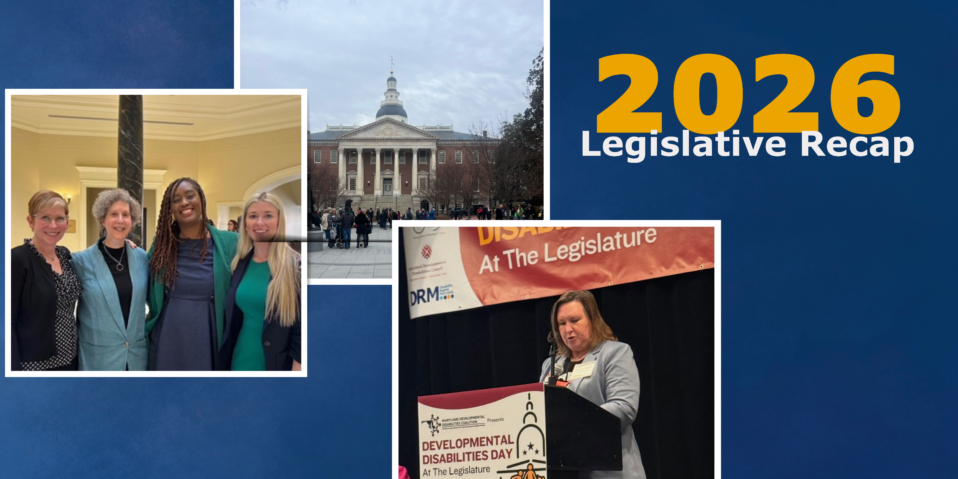
The 2026 legislative session in Maryland was a challenging one for Marylanders with disabilities. DRM worked with partner organizations, individual allies, and legislators to advocate for bills that would protect and advance the rights of people with disabilities in Maryland. During the session, DRM paid close attention to over 170 bills and submitted formal support or opposition to at least 100 of those bills. Below are some highlights of the work we accomplished this year.
Child Welfare
This year we worked on a trio of child welfare bills including HB980, HB1559 and HB1181. Kanaiyah’s Law (HB980/SB996) bans the placement of foster care youth in unlicensed settings like hotels unless the agency is actively looking for placement. It is named after 16-year-old Kanaiyah Ward who died while housed in a hotel by the foster care system. While we wish each bill had gone further than it does to protect children and youth, we are hopeful that these bills will lead to much-needed reform of the child welfare system.
Other bills affecting children’s rights:
- HB0012: Juvenile Sex Offender Registry—Qualifying Offenses and Access; DRM Opposed; Bill Did Not Pass
- HB0014: County Boards of Education—Bullying, Harassment, or Intimidation—Information Collection and Reporting Requirements; DRM Monitored; Bill Passed
- HB396/SB402: Residential Child Care Programs—Education of Children and Training of Child and Youth Care Practitioners; DRM Supported; Bill Passed
Voting
Voting was a big topic for many proposed bills. SB29 also passed and requires that ballot questions include a statement describing the policy change in plain language and a statement explaining the practical outcome of each voting choice. SB241/HB115 also passed and will ensure that individuals released from state correctional facilities will automatically have their voter registration restored. Both bills are waiting to be signed into law by the governor.
Other bills affecting voting rights:
- HB1027/SB901: Election Law—Telephone Voting System—Requirements; DRM Supported with Amendments; Bill Did Not Pass
- SB73: Election Law—Polling Place Procedures—Voting by Elderly Voters and Voters With Disabilities (Accessible and Expedited Voting Act of Maryland); DRM Supported; Bill Did Not Pass
- SB100/HB263: Election Law—Early Voting Centers—Bus Stops; DRM Supported; Bill Passed
- HB0641: Election Law – Curbside Voting – Pilot Program; DRM Supported with Amendments; Bill Did Not Pass
Mental Health
SB412/HB658 will change the way the Community Forensic Aftercare Program (CFAP) operates. CFAP monitors those who are found not criminally responsible because of an intellectual disability or mental illness to ensure they comply with the treatment. Changes to the program ensure greater transparency and will give those involved a voice in the CFAP process, allowing them to choose an agent (outside of their attorney) to represent their interests.
Other bills affecting mental health rights:
- HB1014/SB707: Mental Health Law—Danger to the Life or Safety of the Individual or of Others—Definition (Right to Treatment); DRM Opposed; Bill Passed
- SB550: Health Care Decisions Act—Surrogate Decision Making—Mental Disorders; DRM Opposed; Bill Did Not Pass
- HB632: Certificate of Need—Psychiatric Health Care Facilities and Psychiatric and Mental Health Services—Exemption; DRM Opposed; Bill Did Not Pass
Developmental Disabilities
Again, this year the Developmental Disabilities Administration (DDA) faced budget cuts. DDA provides funds and coordinates community-based services for individuals with intellectual and developmental disabilities. Last year the DDA budget was cut by $126 million. This year Governor Moore proposed another $150 million in cuts. Through collective advocacy, $23 million was restored to this year’s budget.
The Maryland Protecting People with Disabilities Act (HB1445/SB 742) passed. This bill requires the State to follow federal legal requirements that protect people from losing Medicaid and home and community-based services because of procedural errors and processing delays. It requires the state to meet timelines, prevent procedural terminations of Medicaid eligibility, and prevent gaps in services. This bill is critical to ensuring access to home and community-based services and protecting against unnecessary institutionalization.
Other bills affecting developmental disability rights:
- SB742/HB1445: Maryland Medical Assistance Program and Developmental Disabilities Administration—Home-and-Community-Based Services Eligibility Determinations (Maryland Protecting People with Disabilities Act); DRM Supported; Bill Passed
- SB745/HB634: Police Training—Autism and Dementia (LEAD Act of 2026); DRM Monitored; Bill Passed
- HB1015: Developmental Disabilities Administration—Services—Eligibility for Recently Relocated Individuals (Ralph’s Act); DRM Supported; Bill Passed
- HB1445/SB742: Maryland Medical Assistance Program and Developmental Disabilities Administration—Home-and-Community-Based Services Eligibility Determinations (Maryland Protecting People with Disabilities Act); DRM Supported; Bill Passed
Housing
The Fair Chance in Housing Act (SB 937/HB 1073) also passed. This law will add restrictions on when and how landlords can deny someone housing based on their criminal record and makes automatic denials illegal. We remain concerned about how this law will be enforced and hope to work closely with the Maryland Attorney General in the implementation process.
Other bills affecting housing rights:
- SB937: Landlord and Tenant—Residential Leases—Prospective Tenant Criminal History Records Check (Maryland Fair Chance Housing Act); DRM Supported; Bill Passed
- HB315/SB335: Human Relations—Discrimination in Housing—Income-Based Housing Subsidies; DRM Supported; Bill Passed
- HB774/SB462: Landlord and Tenant—Residential Leases and Holdover Tenancies—Local Good Cause Termination (Good Cause Eviction); DRM Supported; Bill Did Not Pass
Thank You!
We would like to thank our donors whose support enabled DRM to advocate for people with disabilities throughout the 2026 legislative session. If you are passionate about advancing the rights of people with disabilities in Maryland and able to give, please consider making a generous contribution to support our work.
Post a comment