Blog

DRM Calls for Emergency Intervention

DRM Calls for Emergency Intervention

The Baltimore Sun article, “MTA Mobility service, down 500 drivers since 2019, reports worst on-time rate in 5 years”  recently revealed the severe hardship faced by  individuals with disabilities who rely on the Maryland Transit Authority’s (MTA) Mobility paratransit services.

Lauren Young, DRM’s Litigation Director, explained that, in addition to being dangerous, these lapses in service violate the Americans with Disabilities Act (ADA), which guarantees people with disabilities equal access to public transportation. Patients miss dialysis appointments, employees miss work, and vulnerable individuals are left waiting for hours in outdoors amidst a global pandemic.

DRM has held MTA to account for over the past five years, working closely with the advocacy group Consumers for Accessible Ride Services (CARS) and most recently with other community partners to prevent proposed budget cuts that would have eliminated 25% of existing bus routes

“We’ve been here before,” Lauren Young said, “These are people’s lives and their civil rights.”

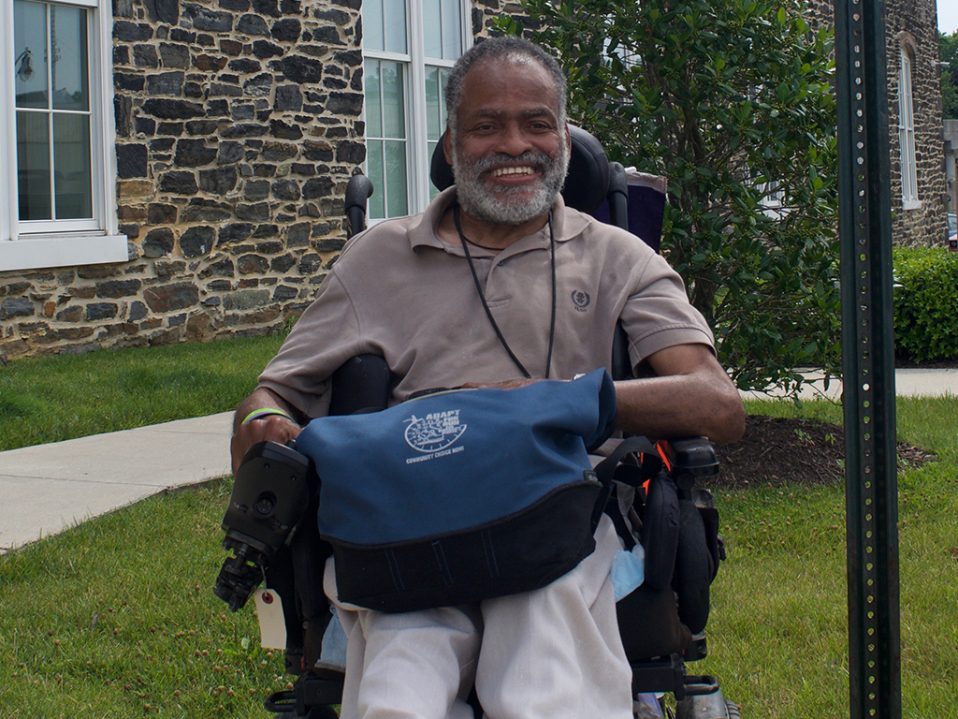
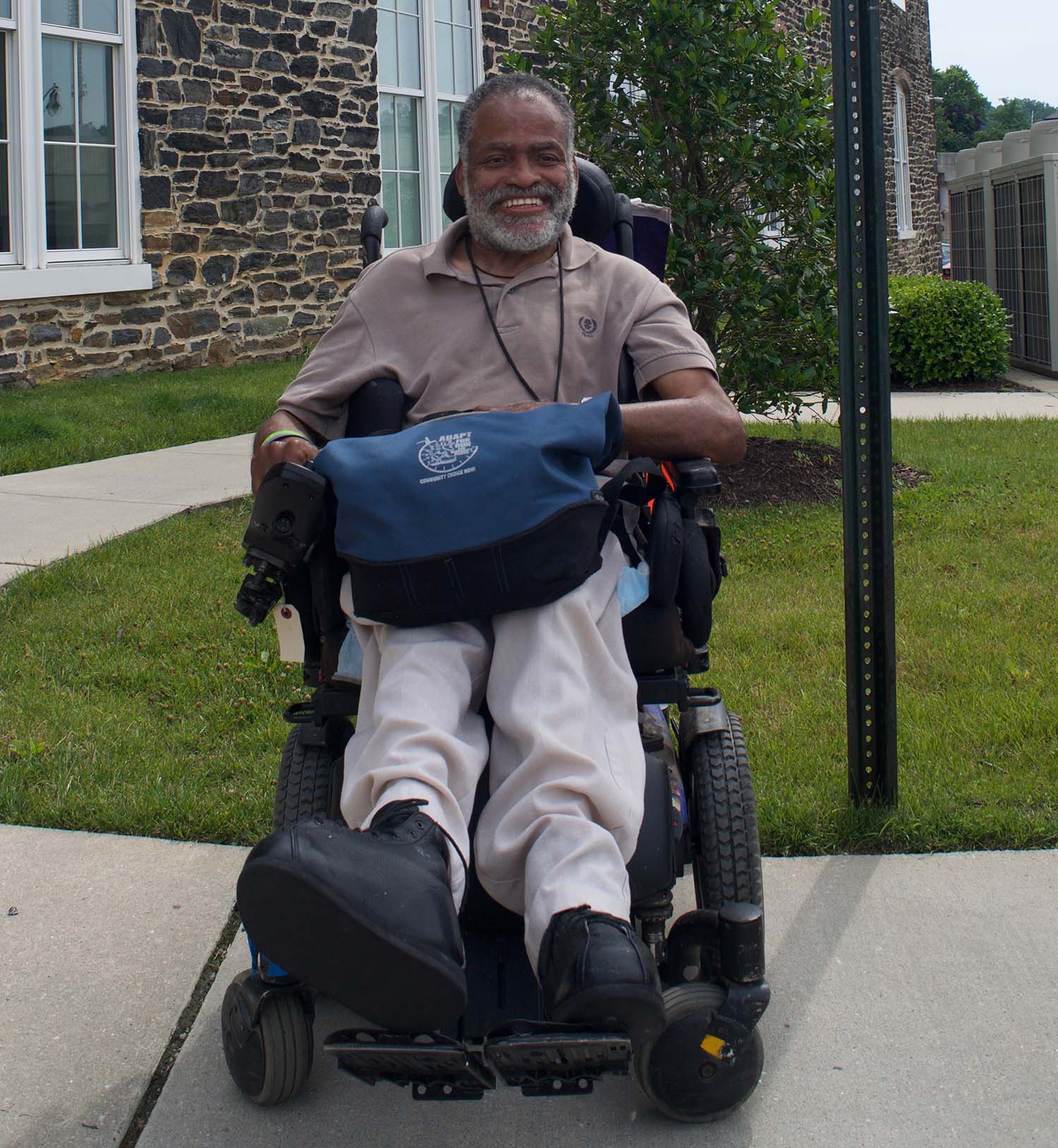
William Fields_Post
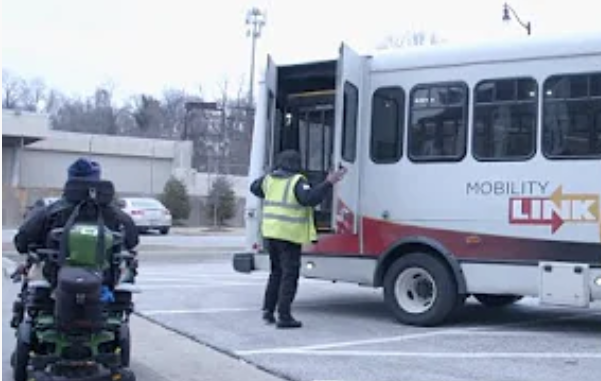
Consumers for Accessible Ride Services (CARS) member William Fields waiting to be picked up by MTA’s Mobility Paratransit services outside of DRM’s office.

Young is calling for emergency intervention, demanding the state offer emergency back-up services, increase funding and prioritize hiring more MTA drivers to operate this essential service.

Stay in the Loop

Join our mailing list to receive updates about Disability Rights Maryland.

Read more

DRM Celebrates the 31st Anniversary of the ADA

DRM Celebrates the 31st Anniversary of the ADA

Red and blue text on a white background that reads "ADA 31, Americans with Disabilities Act. Celebrate the ADA! July 26, 2021." The years 1990-2021 are in a circle of red stars.

On the 31st anniversary of the Americans with Disabilities Act (ADA), Disability Rights Maryland (DRM) salutes its community, partners, and friends who were instrumental in forging and implementing this landmark legislation for people with disabilities. DRM is singularly proud of its accomplishments over the past year to actualize the principles of the ADA in Maryland, which include:

  • Prevented proposed budget cuts that would have eliminated 25% of existing bus routes, jeopardizing paratransit services to critical destinations including dialysis centers, mental health programs, occupational and physical therapy providers for over 30,000 paratransit riders, in collaboration with Consumers for Accessible Ride Services (CARS) and other advocates.
  • Achieved changes in subsidized housing operations of a large public housing agency to fund the creation of accessible, affordable rental housing.
  • Brought legal action against a major municipal jurisdiction in Maryland to obtain compliance for substantial ADA violations in maintaining curb ramps and sidewalks, with co-counsel, the Civil Rights Education and Enforcement Center (CREEC), Disability Rights Advocates (DRA) and Goldstein, Borgen, Dardarian & Ho (GBDH).
  • Filed complaint with the Maryland Department of Education (MSDE), which found the rights of students had been violated by a Maryland school district, and ordered individual, school-wide, and system-wide relief to remedy violations, in partnership with the Public Justice Center (PJC) and the Office of the Public Defender (OPD).
  • Hosted 23 Facebook Live events for parents of students with disabilities about their special education rights and protections during virtual learning due to the COVID pandemic.
  • Led a cross-disability network of advocates whose efforts resulted in the state of Maryland prioritizing people with intellectual and developmental disabilities (I/DD) and direct support professionals in the first phases of COVID vaccination distribution.
  • Advocated successfully for the Maryland Departments of Health (MDH) and Department of Disabilities (MDOD) to issue new guidance stating patients with disabilities needing in-person support, including those being treated for COVID, have the right to access support persons, and that support persons “are permitted to access restrooms, food, and drink while in the health care facility,” as part of a coalition of disability organizations.
  • Compelled psychiatric hospitals to develop technology enabling DRM to provide “Know Your Rights” presentations remotely during the COVID pandemic.
  • Investigated a large county’s public housing policies that only permitted individuals needing overnight care to have live-in aides, finding this policy conflicted with federal fair housing laws and other civil rights statutes for people with disabilities. As result, the county agreed to eliminate this overly-restrictive requirement.

Together, in partnership with you, DRM is committed to creating a world in which people with disabilities are fully included in the workplace, neighborhoods and all aspects of community life.

Stay in the Loop

Join our mailing list to receive updates about Disability Rights Maryland.

Read more

DRM Leads Development of Alternatives to Guardianship

DRM Leads Development of Alternatives to Guardianship

Two women lounging on a green lawn. They are both smiling, and one has her hands on the shoulders of the other.

Too often people with disabilities are stripped of their rights to make everyday decisions that govern their lives and who they are including who they can partner with or marry, whether they can vote, where they can work, and what health care and services they receive. Disability Rights Maryland (DRM) has seen the detrimental impact that unnecessary guardianships have on our clients’ lives. It can fundamentally restrict a person’s liberty, lead to loss of association and even institutionalization. Seeking to bolster alternatives to guardianship, DRM has led the charge to establish supported decision-making (SDM) in the state of Maryland.

As the media focuses on the restriction of Britney Spears’ rights under guardianship, DRM knows that restrictive and unnecessary guardianships have long been and continue to be a critical and fundamental civil rights issue for people with disabilities. This issue is not new.

SDM provides a possible solution and an alternative to guardianship. SDM is a tool that offers support to people with disabilities in making important decisions about their lives without compromising their legal right to make these decisions. A person using SDM selects supporters, such as friends and family members, who they trust to help the them make choices and communicate those choices to others. It is fundamentally how all of us, with or without disabilities make decisions, but for people with disabilities, it can be a tool that eliminates or limits the need for guardianship.

In Maryland, DRM has led an initiative to recognize SDM as an alternative to guardianship. With initial assistance through a small grant from our Developmental Disabilities (DD) Council, DRM established and chairs Maryland’s Cross-Disability SDM Coalition, a network of over 27 state partners, advocacy agencies, and self-advocates with representation from the developmental disabilities, mental health, traumatic brain injury, and aging communities. The Coalition was tasked with creating and implementing an action plan to recognize SDM in Maryland and received technical assistance from the National Resource Center for Supported Decision-Making on this project. Megan Rusciano, Co-Managing Attorney of DRM’s Developmental Disabilities, Health Care, and Victims of Crime Act (VOCA) team serves as project lead for this program, and continues to support the coalition in implementing its action plan to make supported-decision making a viable legal alternative in Maryland.

DRM’s work with the Coalition is rooted in our 40+ years of expertise and experience working alongside people with disabilities to preserve and advance their rights to self-determination.

The Coalition’s work is ongoing, and includes:

  • Developing educational materials on SDM and providing training across the state to a myriad of different audiences
  • Conducting outreach to communities and critical partners who should learn more about supported decision-making
  • Advocating for guardianship reform initiatives and broader recognition of SDM
  • Collecting data on the use of SDM in Maryland

For more information about DRM and to keep up-to-date with our work with SDM and other projects, sign up for our mailing list below.

Stay in the Loop

Join our mailing list to receive updates about Disability Rights Maryland.

Read more