Blog

PRESS RELEASE: Report Reveals Issues Related to Patient Deaths at Perkins Hospital

For immediate release: June 4, 2026

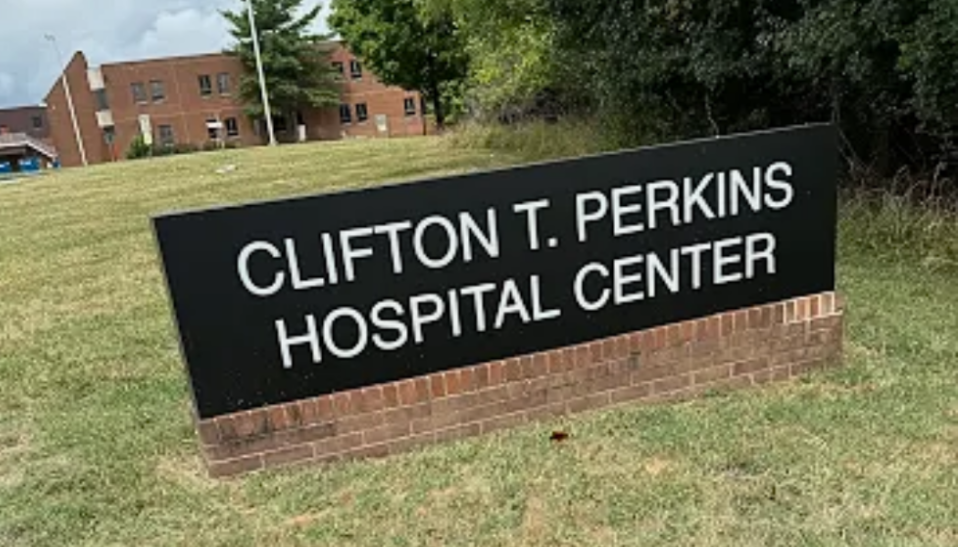
Baltimore, MD– After receiving complaints of abuse, neglect, and multiple patient deaths, Disability Rights Maryland (DRM) conducted a two-year investigation of Clifton T. Perkins Hospital Center (CTPHC). The resulting report, “Treatment Not Trauma: Urgent Action Required to Protect Patients at the Clifton T. Perkins Hospital Center”, released today, details key findings and recommendations to ensure patient safety.

The investigation found:

  • Lack of Appropriate Medical Care
  • Lack of Appropriate Behavioral Health Care
  • Unlawful Use of Seclusion and Restraint
  • Safety Concerns
  • Lack of Transparency, Accountability, and Oversight

According to DRM Managing Attorney, Leslie Seid Margolis, “This report is the result of almost three years’ of onsite visits, interviews, and record reviews. This isn’t about one incident or one bad actor. The findings reflect deeper systemic failures that require immediate oversight, transparency, and reform.”

DRM Senior Advocate Tam Lynne Kelley said, “Basic standards for any facility include safety, dignity, and care. As a state psychiatric hospital, CTPHC should provide effective evaluation and treatment with the goal of enabling patients to recover. Sadly, that is not always the case. Patients experience violations of their rights, sometimes with tragic consequences.” Kelley noted that several patients have died after not receiving adequate medical care and that “things as simple as access to clean drinking water remain an outstanding issue at the hospital.”

CTPHC is one of Maryland’s state-operated psychiatric hospitals with an annual budget of $97 million. “Maryland spends millions of dollars to operate Perkins Hospital with the promise of ‘recovery-based trauma informed care for patients’. This report has revealed that is not the case,” according to Margolis.

The report points to three deaths at CTPHC, and one person who had serious medical complications following delayed medical care.  DRM Executive Director, Meghan Marsh said, “We are very concerned about what we found, and we remain optimistic that the current hospital leadership will work with us to improve conditions there. Patients should receive high-quality care in a therapeutic hospital environment. It really is that straightforward.”

About Disability Rights Maryland

Disability Rights Maryland (DRM) is a nonprofit organization and Maryland’s designated Protection and Advocacy agency (P&A). DRM’s federally funded Protection & Advocacy for Individuals with Mental Illness (PAIMI) program provides legal services to Marylanders with significant mental illness. DRM investigates allegations of abuse and neglect, including deaths, and protects the rights of people with significant mental illness to be free from harm.

Media Contacts

Leslie Seid Margolis, Managing Attorney

LeslieM@DisabilityRightsMD.org

443-692-2505

Senator Clarence K. Lam

clarence.lam@senate.maryland.gov

410-841-3653

Susan Kadis

President, DRM Mental Health Advisory Council

sdeek2453@gmail.com

410-598-8515

Read more

2026 Legislative Highlights

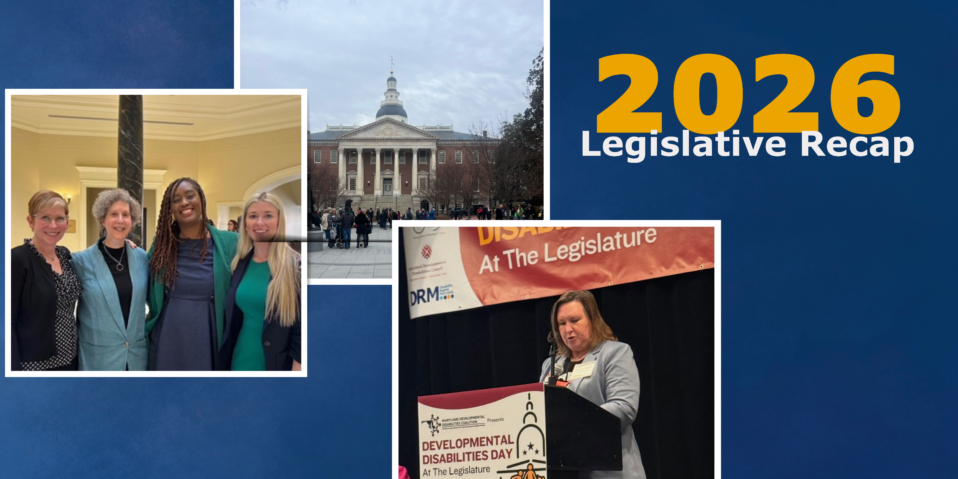
The 2026 legislative session in Maryland was a challenging one for Marylanders with disabilities. DRM worked with partner organizations, individual allies, and legislators to advocate for bills that would protect and advance the rights of people with disabilities in Maryland. During the session, DRM paid close attention to over 170 bills and submitted formal support or opposition to at least 100 of those bills. Below are some highlights of the work we accomplished this year. 


Child Welfare

This year we worked on a trio of child welfare bills including HB980, HB1559 and HB1181. Kanaiyah’s Law (HB980/SB996) bans the placement of foster care youth in unlicensed settings like hotels unless the agency is actively looking for placement. It is named after 16-year-old Kanaiyah Ward who died while housed in a hotel by the foster care system. While we wish each bill had gone further than it does to protect children and youth, we are hopeful that these bills will lead to much-needed reform of the child welfare system.

Other bills affecting children’s rights:

  • HB0012: Juvenile Sex Offender Registry—Qualifying Offenses and Access; DRM Opposed; Bill Did Not Pass
  • HB0014: County Boards of Education—Bullying, Harassment, or Intimidation—Information Collection and Reporting Requirements; DRM Monitored; Bill Passed
  • HB396/SB402: Residential Child Care Programs—Education of Children and Training of Child and Youth Care Practitioners; DRM Supported; Bill Passed

Voting

Voting was a big topic for many proposed bills. SB29 also passed and requires that ballot questions include a statement describing the policy change in plain language and a statement explaining the practical outcome of each voting choice. SB241/HB115 also passed and will ensure that individuals released from state correctional facilities will automatically have their voter registration restored. Both bills are waiting to be signed into law by the governor.

Other bills affecting voting rights:

  • HB1027/SB901: Election Law—Telephone Voting System—Requirements; DRM Supported with Amendments; Bill Did Not Pass
  • SB73: Election Law—Polling Place Procedures—Voting by Elderly Voters and Voters With Disabilities (Accessible and Expedited Voting Act of Maryland); DRM Supported; Bill Did Not Pass
  • SB100/HB263: Election Law—Early Voting Centers—Bus Stops; DRM Supported; Bill Passed
  • HB0641: Election Law – Curbside Voting – Pilot Program; DRM Supported with Amendments; Bill Did Not Pass
                             

Mental Health

SB412/HB658 will change the way the Community Forensic Aftercare Program (CFAP) operates. CFAP monitors those who are found not criminally responsible because of an intellectual disability or mental illness to ensure they comply with the treatment. Changes to the program ensure greater transparency and will give those involved a voice in the CFAP process, allowing them to choose an agent (outside of their attorney) to represent their interests.

Other bills affecting mental health rights:

  • HB1014/SB707: Mental Health Law—Danger to the Life or Safety of the Individual or of Others—Definition (Right to Treatment); DRM Opposed; Bill Passed
  • SB550: Health Care Decisions Act—Surrogate Decision Making—Mental Disorders; DRM Opposed; Bill Did Not Pass
  • HB632: Certificate of Need—Psychiatric Health Care Facilities and Psychiatric and Mental Health Services—Exemption; DRM Opposed; Bill Did Not Pass


Developmental Disabilities

Again, this year the Developmental Disabilities Administration (DDA) faced budget cuts. DDA provides funds and coordinates community-based services for individuals with intellectual and developmental disabilities. Last year the DDA budget was cut by $126 million. This year Governor Moore proposed another $150 million in cuts. Through collective advocacy, $23 million was restored to this year’s budget.

The Maryland Protecting People with Disabilities Act (HB1445/SB 742) passed. This bill requires the State to follow federal legal requirements that protect people from losing Medicaid and home and community-based services because of procedural errors and processing delays.  It requires the state to meet timelines, prevent procedural terminations of Medicaid eligibility, and prevent gaps in services. This bill is critical to ensuring access to home and community-based services and protecting against unnecessary institutionalization.

Other bills affecting developmental disability rights:

  • SB742/HB1445: Maryland Medical Assistance Program and Developmental Disabilities Administration—Home-and-Community-Based Services Eligibility Determinations (Maryland Protecting People with Disabilities Act); DRM Supported; Bill Passed
  • SB745/HB634: Police Training—Autism and Dementia (LEAD Act of 2026); DRM Monitored; Bill Passed
  • HB1015: Developmental Disabilities Administration—Services—Eligibility for Recently Relocated Individuals (Ralph’s Act); DRM Supported; Bill Passed
  • HB1445/SB742: Maryland Medical Assistance Program and Developmental Disabilities Administration—Home-and-Community-Based Services Eligibility Determinations (Maryland Protecting People with Disabilities Act); DRM Supported; Bill Passed


Housing

The Fair Chance in Housing Act (SB 937/HB 1073) also passed. This law will add restrictions on when and how landlords can deny someone housing based on their criminal record and makes automatic denials illegal. We remain concerned about how this law will be enforced and hope to work closely with the Maryland Attorney General in the implementation process.

Other bills affecting housing rights:

  • SB937: Landlord and Tenant—Residential Leases—Prospective Tenant Criminal History Records Check (Maryland Fair Chance Housing Act); DRM Supported; Bill Passed
  • HB315/SB335: Human Relations—Discrimination in Housing—Income-Based Housing Subsidies; DRM Supported; Bill Passed
  • HB774/SB462: Landlord and Tenant—Residential Leases and Holdover Tenancies—Local Good Cause Termination (Good Cause Eviction); DRM Supported; Bill Did Not Pass

Thank You!

We would like to thank our donors whose support enabled DRM to advocate for people with disabilities throughout the 2026 legislative session. If you are passionate about advancing the rights of people with disabilities in Maryland and able to give, please consider making a generous contribution to support our work.

Read more

DRM Statement about Snow and Ice in Travel Paths

DRM Statement, January 29, 2026 


We recognize that this storm has created serious challenges, and that extremely cold temperatures and repeated freeze–thaw cycles make snow and ice removal more difficult. We appreciate the actions Baltimore City and Maryland are taking and their efforts to communicate with residents. At the same time, more must be done to ensure that people with disabilities are not left without access to transportation, medical care, work and their communities. 


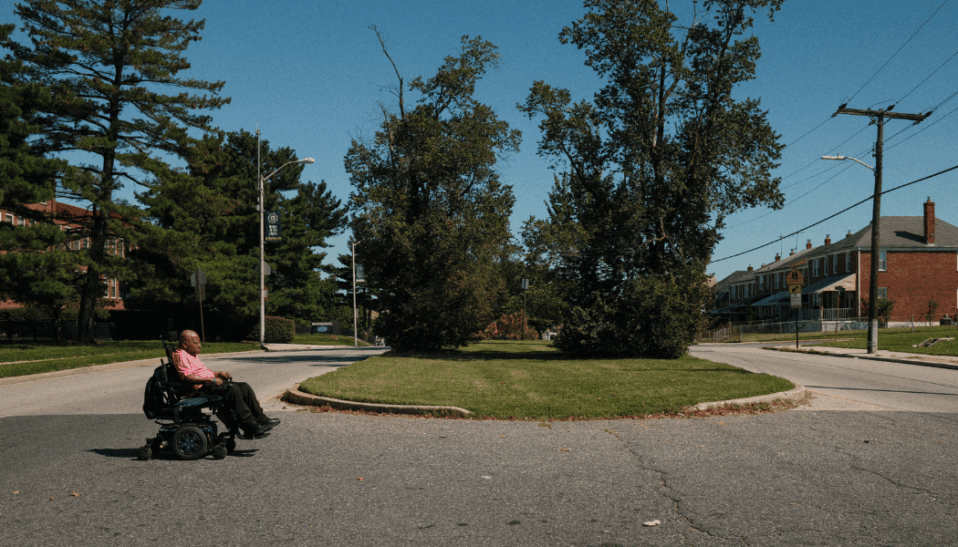
When sidewalks, curb cuts, and bus stop boarding areas are not fully cleared of snow and ice, people with disabilities can be effectively cut off from public transit and daily life, even after roads become passable. For wheelchair users, people who use walkers or canes, and many other people with disabilities, a single blocked curb ramp can make an entire trip impossible. In situations like these, we routinely hear that people miss medical appointments, cannot get to work, or are forced to remain at home days after a storm because the pedestrian network is only partially cleared. When sidewalks are impassable, people are often forced into the street to get around snowbanks or ice, creating serious and predictable safety risks. 


These impacts are compounded during prolonged cold snaps like the one Maryland is experiencing now, where hardened snow and refreezing turn untreated areas into sheets of ice. In these conditions, accessibility barriers are not just inconvenient; they are dangerous and exclusionary. 


These issues are also not new. Baltimore has a history of inaccessible sidewalks and curb ramps. The City is operating under the Goodlaxson1 partial consent decree. Under the ADA and the Goodlaxson consent decree, Baltimore has an obligation not only to build accessible sidewalks and curb ramps, but to maintain them in a condition that people with disabilities can actually use. The decree also mandates an annual public initiative to educate the public on the need for timely removal of snow and other debris from curb ramps and pedestrian walkways that provide access to bus stops and public transportation stations. 


Maintenance also means clearing sidewalks to a fully usable path width, not just a narrow trench. After snowstorms, sidewalks are often cleared only to a narrow, shovel-width path. While well-intentioned, this does not accommodate wheelchair users, people with walkers or other mobility devices, or others who need space and stability to move safely. For many, including people with visual disabilities, these narrow and uneven paths can be disorienting and hazardous. A path that narrow is functionally unusable and can be just as exclusionary as no clearing at all. 


In Baltimore City, residential and commercial property owners are legally required to clear snow and ice from sidewalks within three hours after a snowfall ends, or by 11:00 a.m. if snowfall stops between 3:00 p.m. and 6:00 a.m. While enforcement may vary during extreme conditions, these requirements exist because sidewalks are part of the public pedestrian network and must remain accessible to everyone. The Baltimore Snow Corps pilot program reflects an important recognition that older adults, people with disabilities, and others may need assistance clearing sidewalks. 


These conditions also directly affect people who rely on paratransit services, who must be able to safely access the vehicle. When sidewalks are icy, narrowed, or blocked, people may be unable to reach the pickup point, board the vehicle safely, or navigate from the drop-off location to their destination. The result is that people may lose access to essential services, not necessarily because the service is unavailable, but because the surrounding pedestrian environment makes it unusable.  


For many riders with disabilities, buses running does not mean transit is usable if sidewalks, curb ramps, and bus stops remain blocked or unsafe. Without clear and accessible paths to reach buses, people remain effectively cut off from transportation and community access even as service resumes. 


If roads reopen but sidewalks, curb ramps, bus stops, and pedestrian routes remain blocked or constricted, transportation and community access are “open” in name only for people with disabilities. True recovery from a storm requires clearing the full accessible travel path so that people with disabilities can safely move through the city and maintain access to care, work, and community life on the same timeline as everyone else. 


Gabriel Rubinstein 

Managing Attorney 

Disability Rights Maryland 


Read more

A Mother’s Fight for Fairness — Linda and Troy’s Story

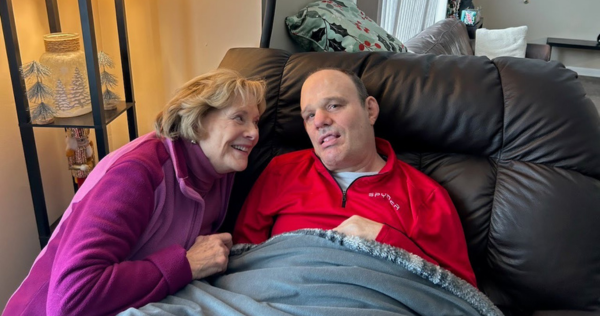
Photo of Linda and her son Troy. Linda is a older White woman with short blonde hair wearing a purple sweater and squatting down next to Troy and smiling at him. Troy is an older White man sitting in a sofa chair. He is wearing a red sweater and sitting under a blue blanket.

When Linda talks about her son Troy, her face lights up. “He’s my inspiration,” she says. Troy is almost 57 and has lived his entire life with tuberous sclerosis, a rare genetic disorder that causes tumors to grow in the brain and other organs. It has meant years of seizures, developmental delays, and constant medical care — but it has also meant a lifetime filled with joy, humor, and resilience.

Troy grew up surrounded by love. As a baby, he started having seizures at six months old. Doctors didn’t know what was wrong at first. The condition wasn’t widely recognized in the U.S. at the time. Still, Linda pushed for answers. She worked full-time, raised her son, finished her degree at Towson University, and completed a master’s program at Johns Hopkins — all while becoming Troy’s fiercest advocate.

“I knew I needed to learn everything I could,” she says. “Nobody gives you a manual when your child is born.”

Eventually, specialists at Kennedy Krieger and Johns Hopkins finally diagnosed Troy. The seizures, the tumors, the developmental delays — it all made sense at last. And from that moment on, Linda built her life around making sure Troy got the support he needed to live safely and with dignity.

For decades, Troy had funding for one-on-one community support — a service that provided trained staff to help him move safely through daily life. With multiple seizure types and mobility challenges, Troy cannot go out alone. He needs someone with him when he walks, travels, or even gets into a car.

“It’s common sense,” Linda says. “He’s medically fragile. He needs help.”

But in December of last year, everything changed.

Linda got a letter saying the state planned to cut Troy’s one-on-one services — support he had received for nearly a decade. The explanation was vague. The reasons didn’t make sense. And no one could tell her exactly what was “wrong” with his paperwork.

“It felt like trying to play a game when you don’t know the rules,” she says.

The nursing plan? They said it wasn’t “adequate.”
The personal plan? They said it wasn’t “current enough.”

When Linda pressed for details, she got none.

Her heart dropped.

She knew what losing that funding would mean: fewer outings, more isolation, and far more risk. Troy’s health had already declined. He now used a G-tube for feeding and had trouble walking on his own. Removing support now wasn’t just confusing — it was dangerous.

“I thought, ‘You’re taking away the very thing that keeps him safe?’” she remembers. “I couldn’t accept that.”

So, Linda did what she’s always done. She fought. Hard.

She gathered letters from doctors, including the state’s only adult tuberous sclerosis specialist. She pushed for updated assessments, collected months of documentation, organized support from his provider agency, and searched for someone — anyone — who could help her navigate the confusing system. A system she had worked in for over 4 decades in various capacities.

That’s when she called Disability Rights Maryland.

“When the phone rang and someone said, ‘We got your message, please be patient,’ it meant everything to me,” she says. “Just to be heard.”

From there, Linda connected with an attorney who took her concerns seriously, explained her options, and guided her through the appeal process. For the first time in months, she didn’t feel like she was fighting alone.

And she was determined to do more than win for just her son.

“This isn’t only about Troy,” she said. “This is about every family who gets a letter they don’t understand. Every parent who’s older. Every person who doesn’t have someone to fight for them.”

And for the next seven months, that’s what she did — with a team behind her and her son beside her.

When Families Fight Alone — and Why No One Should Have To

By the time the spring arrived, Linda had spent months chasing paperwork, calling agencies, collecting medical letters, and pushing through a process that felt confusing at every turn. And she knew she wasn’t the only one.

Across Maryland, families of people with disabilities were quietly losing services — sometimes without clear explanations, sometimes without the tools to fight back, and sometimes without anyone in their corner.

“I kept thinking about parents who are in their 70s, caring for adult children in their 50s,” she says. “What happens to them when the state takes away funding? Who helps them when they don’t even know where to start?”

Fear and confusion are powerful barriers. Many people give up before they even begin.

“Fear keeps you stuck in the mud,” Linda says. “But you can’t let it win. You can’t do it alone either.”

That’s why she kept pushing.

With guidance from a DRM attorney, Sandy Balan, she learned about a process she didn’t even know existed: a case resolution conference. It was a chance to meet directly with the state and present updated information before going to a full hearing.

And Troy could be part of it.

Linda arranged for the meeting to take place at Troy’s home. His longtime house manager set up the video screen. Staff members joined. And when the state representatives logged in, they didn’t just see paperwork — they saw Troy, a strategic decision by Linda.

They saw him walk carefully with a gait belt.
They saw his fatigue.
They saw the reality of his health after a year of decline.

“They said, ‘We didn’t know things had changed this much,’” Linda remembers.

For the first time, she felt the system pause long enough to truly see her son.

And that changed everything.

Within weeks, the state reinstated Troy’s one-on-one community support. The funding he had relied on for nearly a decade would return in December.

“I knew we won right there,” Linda says. “Not just for us — but for everyone who needed somebody to keep fighting.”

But the victory also underscored a deeper problem.

Many families don’t know their rights. Many don’t know where to ask questions. And too many feel defeated before they begin.

The letters are confusing.
The rules are unclear.
The deadlines are tight.
And the stakes are enormous.

“People are losing services for reasons they don’t even understand,” Linda says. “It shouldn’t take a master’s degree, decades of experience, and a full team of professionals just to keep someone safe.”

That is exactly why Disability Rights Maryland matters.

DRM completed the team she needed: the attorney who knew the law, the guidance to gather evidence, and the reassurance that she didn’t have to navigate the system alone.

“You were the wind beneath my wings,” she says. “I slept at night because I knew you were behind me.”

Now, Linda wants other Maryland families to know that help exists — and they deserve to use it.

Her advice is simple and powerful:

  • Don’t give up before you start.
  • Build a team from people who already care about your loved one.
  • Ask questions until you get clear answers.
  • Lean on professionals and friends who support you.
  • And don’t let fear make you believe you’re alone.

Because no family should have to fight this hard for basic safety. No one should lose services because they didn’t understand a form. And no one should feel abandoned in a system that is supposed to protect them.

Troy is doing better now. His nutrition is stable. His care team understands his needs. And thanks to his reinstated funding, he can continue to go outside with the support he needs to stay safe.

“He’s resilient,” Linda says. “He inspires me every day.”

Her hope is that Maryland listens — not just to her, but to every family fighting quietly in the background.

“Why take away support from people who need it most?” she asks. “It’s wrong. And it’s happening more than people realize.”

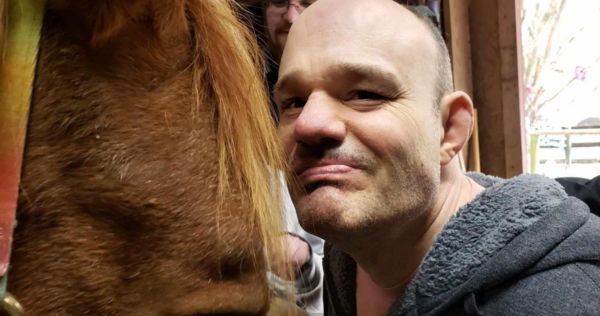
Troy is an older White man smiling next to a horse.

Linda and Troy’s story makes one thing clear:

Families shouldn’t have to fight these battles alone. And because of supporters like you, they don’t have to.

Read more

Take Survey to Determine Our Priorities

Man and woman with child who is in a wheelchair

Disability Rights Maryland would like to hear from you!

We are conducting our annual Advocacy Services Plan survey, asking the community to weigh in about the most important disability-related legal needs facing Marylanders and what DRM should focus on in the coming three years. We especially want to hear from people with disabilities, Black, Indigenous and people of color (BIPOC), and others affected by intersectional discrimination and oppression. DRM’s current Advocacy Services Plan can be found here: FY-2024-Advocacy-Service-Plan-final.pdf (disabilityrightsmd.org). Our 2025-2027 Advocacy Services Plan will be finalized and issued by the end of this year.


There are so many issues we would like to tackle, but our resources are limited and we want to concentrate on the most important needs in our communities.


Here are 4 ways to take the survey by August 22, 2024:

1. Submit online in English or Spanish.

2.  Print a English or Spanish survey using link below and mail to Disability Rights Maryland 1500 Union Ave # 2000, Baltimore, MD 21211

3.  Email a completed survey to Feedback@DisabilityRightsMD.org 

4.  Call 410-727-6352 ext. 0 to complete over the phone or request to complete in-person


To request a paper survey, provide feedback over the phone or in-person, or if you need an accommodation or translation to participate, call us at 410-727-6352 ext. 0 or email JackieP@disabilityrightsmd.org.

Read more