Blog

Coronavirus (COVID-19) Advocacy, Information, & Resources

A Message from Us

Disability Rights Maryland (DRM) is working hard to stand together with Marylanders with disabilities and will continue to do all that we can to provide excellent services to our communities during this challenging time.

For legal assistance, we encourage you to call our intake department using the phone numbers listed below:

Phone: 410-727-6352 (EXT. 0)

Toll Free: 1-800-233-7201

TTY: 410-235-5387

Please leave a message and we will return your call as soon as possible. Please note that return calls may be made from blocked numbers since staff are working remotely.

Subscribe to our email list and follow us on Facebook and Twitter to stay up to date with our COVID-19 related updates and advocacy.


How We Can Help

Disability Rights Maryland recognizes the serious threat to the health, safety, and legal rights of people with disabilities posed by the coronavirus (COVID-19).  Although DRM’s offices are currently closed, our staff is working remotely to ensure we continue to protect the rights of people with disabilities throughout Maryland.

Please contact us if you:

  • Have questions about your legal rights during this time
  • Are unable to access critical information
  • Wish to speak with an attorney about a disability-related legal issue

We also need to hear from you about how institutions and services throughout the state are managing the impact of COVID-19.  To ensure the safety of individuals with disabilities residing in facilities or receiving services in the community, employees, and our staff, we are gathering information from people who have been in facilities (including psychiatric hospitals and residential treatment centers) or involved in providing or receiving community-based services to tell us your concerns.

Please contact us if you observe or have problems, including:

In a facility:

    • You have not been given information about the signs of COVID-19, how to stay safe, and how staff will help you stay safe. 
    • Staff and visitors are coming into the facility with symptoms of COVID-19 (coughing, fever, shortness of breath) or are not being screened for symptoms at the door. Information about COVID-19 should be posted at the entrance and around the facility. 
    • There are staffing shortages in the facility. 
    • You live in a small facility or group home where someone is sick and you can’t get physical distance to be safe. 
    • Staff are not being careful with personal hygiene to protect against COVID-19 (washing hands frequently or using hand sanitizer, staying 6 feet away when possible, wearing protective gear if caring for someone who is ill). 
    • You don’t have access to medications, food or other necessary items.  
    • You don’t have access to needed services.
    • You are being abused or neglected, including extreme isolation, lack of human contact, and/or over–medication.
    • You are being pressured to sign a do-not-resuscitate order (DNR).
    • You are being denied aggressive treatment.
    • You are in a high-risk group for complications from COVID-19 and/or are experiencing increased barriers to transitioning to a community placement.
    • For youth in RTCs, you do not have access to education or IEP services.

In the community:

    • Your in-home assistance staffing changes or is not available. 
    • Your staffing has been impacted by COVID-19 and your needs are not being met. 
    • Your staff is not careful with personal hygiene (washing hands often, staying 6-feet away when possible, wearing protective gear to stop the spread of infection). 
    • You can’t get your medications. 
    • You don’t have access to food or supplies you need. 
    • You can’t access necessary telehealth services because you don’t have needed technology, phone minutes or internet services;
    • You are being pressured to sign a do-not-resuscitate order (DNR).
    • You are being denied aggressive treatment.
    • For youth, you don’t have access to education or IEP services.

Last Updated: April 7, 2020
Read more

DRM‘s Adrienne Mallinson Presents at the 2019 TASH Conference

On December 7, 2019, Adrienne Mallinson, a Managing Attorney for the Developmental Disabilities and Healthcare team at Disability Rights Maryland (DRM), presented at the 2019 TASH Annual Conference in Phoenix, Arizona.

TASH (The Association for Persons with Severe Handicaps) is an international leader in disability advocacy. Founded in 1975, TASH works to advance inclusive communities through advocacy, research, professional development, policy, and information and resources for parents, families, and self-advocates. The inclusive practices TASH validates through research have been shown to improve outcomes for all people.

Ms. Mallinson summarized the contents of her white paper which describes the challenges facing individuals with intellectual and developmental disabilities in accessing personal assistance and personal support services in Maryland. Her presentation described the current problems with Developmental Disabilities and Community First Choice (CFC) services in Maryland and outlines the legal and policy choices facing advocates around the State.

Read more

First Time Disability Rights Addressed

During the Democratic presidential debate on December 19, 2019, Tom Steyer was asked what specific steps a president could take to integrate individuals with disabilities into the workforce and their local communities. This is one of the first times, this election cycle, that a Democratic presidential debate included a prominent question about how candidates planned to address the needs of individuals with disabilities. Mr. Steyer surmised that the issues facing individuals with disabilities could be solved through increased focus and funding.

The question was then posed to Andrew Yang. Mr. Yang discussed his experience as a father of an autistic child while reframing the issue. Candidate Yang posited that the crux of the issue is how American society conflates economic value with human value. Mr. Yang proposed a “freedom dividend” of $1,000 a month to help families and suggested that the issue of education should be a federal priority, not a local one. Disability advocates have discussed potential conflicts between the freedom dividend and existing federal benefits programs.

Senator Elizabeth Warren, a former special education teacher, requested time to answer the question and proposed fully funding the Individuals with Disabilities Education Act (IDEA). When Congress initially passed IDEA they promised to fund 40% of the additional cost of special education. Currently, the federal government only funds approximately 14% of the extra cost. DRM staff works to ensure students in Maryland receive a free appropriate public education in the least restrictive environment, a right guaranteed by the IDEA and Section 504 of the Rehabilitation Act.

Senator Warren also discussed her housing plan which includes provisions related to increasing housing for people with disabilities that want to live independently. Finally, Senator Warren promised to address the pay disparity between individuals without disabilities and those with disabilities in federal contracts. DRM supported efforts to pass The Ken Capone Equal Employment Act (EEA) to abolish the payment of subminimum wage to people with disabilities in Maryland by 2020.

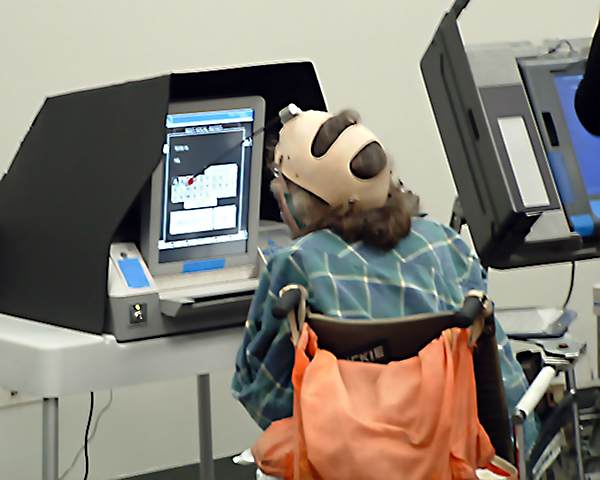
Disability Rights Maryland (DRM) was encouraged that the issue of disability rights was discussed during the Democratic presidential debate. These issues directly impact the 61 million Americans with a disability who make up approximately 23% of the electorate. DRM is committed to ensuring that the electoral process is fully accessible. During the 2018 election, Disability Rights Maryland surveyed candidates for statewide office and federal positions on issues related disabilities. DRM will be registering people to vote at a live stream of the Presidential Forum on Disability Issues an event Hosted by the American Association of People with Disabilities (AAPD) and REV UP Texas.

Read more

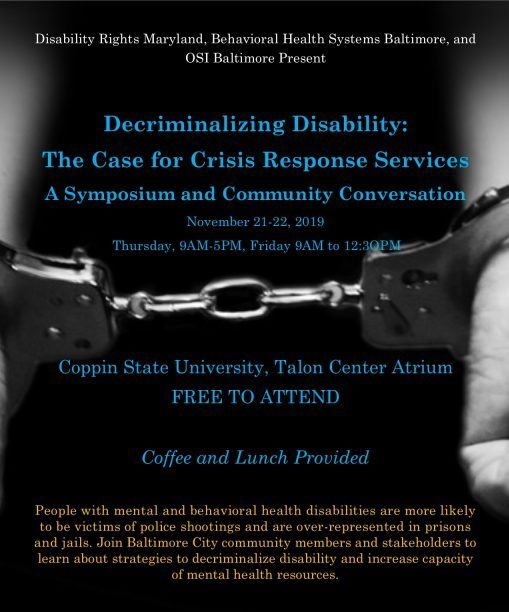
Decriminalizing Disability: The Case for Crisis Response in Baltimore City

Luciene Parsley, DRM Director of Legal Advocacy

Luciene Parsley, DRM Director of Legal Advocacy.

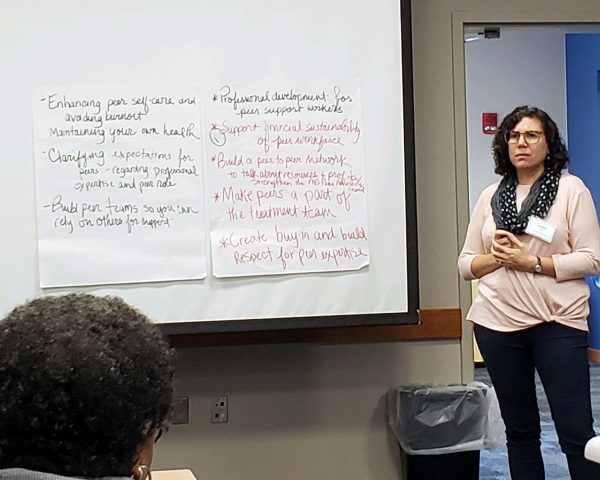
Disability Rights Maryland recently co-hosted a symposium, Decriminalizing Disability: The Case for Crisis Response in Baltimore City, with Behavioral Health System Baltimore and Open Society Institute-Baltimore on November 21st and 22nd at Coppin State University in West Baltimore. Attendees represented a broad range of backgrounds and perspectives including civil rights advocates, behavioral health providers, and members of the Baltimore City Police Department.

The program was designed to review gaps in the behavioral health system and explore alternative methods of crisis response for people with disabilities instead of depending solely on law enforcement to respond during a mental health crisis. The first day of the symposium featured a series of panels with experts from around the country who discussed how to increase capacity for community-based services and to outline a vision for a comprehensive system of care for individuals with disabilities that does not rely solely on the police. The second day engaged attendees in discussions to identify priorities and practical implementation strategies. The group identified several priorities including increased housing; capacity for behavioral health services around the clock and to include youth services; reforming 911 dispatch services to allow for diversionary options; and crisis intervention education for police to recognize stigma, bias, and how police presence can cause trauma during encounters. Participants were then given the opportunity to share their ideas regarding implementation strategies with others in smaller groups.

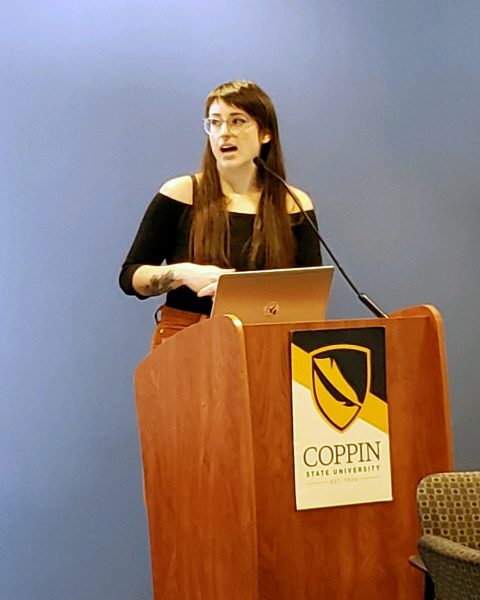
Chelsea Swift Speaks at Decriminalizing Disability

Panelist Chelsea Swift, CAHOOTS/White Bird Clinic, speaks at the Decriminalizing Disability symposium.

The symposium offered an opportunity for advocates, stakeholders, providers, and law enforcement to share their concerns with the existing behavioral health system and begin to develop a plan that addresses the needs of the community. Disability Rights Maryland was glad to help facilitate these conversations and move towards meaningful systemic reforms that will improve the lives of individuals with disabilities living in Baltimore.


Read more

Disability Right Maryland’s Munib Lohrasbi Honored as a part of the 2019 Choice Advocate Team of the Year

Munib Lohrasbi, attorney for Disability Rights Maryland (DRM), is being honored by NARAL Pro-Choice Maryland as a part of their 2019 Choice Advocate Team of the Year. The prestigious recognition is given to advocates who have worked tirelessly for the passage of Maryland laws that prohibit forced solitary confinement of pregnant inmates (the first if its kind the U.S.) and juveniles.

Munib started as an OSI-Baltimore Community Fellow at DRM in November, 2017, and is currently an active attorney- campaigning for change on major community issues. “It is a privilege to work with a group of advocates who are so passionate about impacting change,” stated Munib, “and creating a more just society. I’m honored to be recognized as part of NARAL Pro-Choice Maryland’s 2019 Choice Advocate Team of the Year.”

In a recent project, Munib investigated conditions for incarcerated pregnant women at the Maryland Correctional Institution for Women (MCIW), the only State correctional facility for women in Maryland. The review focused on the use of restrictive housing, or confinement in a cell for 22 hours or more per day. Munib and his professional colleagues were alarmed that women were jailed without adequate access to mental health programming or services. Going forward, the goal is to improve access to correctional mental health services and to reduce or eliminate the use of restrictive housing, particularly for individuals with serious mental illnesses who are at the greatest risk of harm.

To read the full report detailing Munib’s findings at MCIW and recommendations for reform visit https://disabilityrightsmd.org/wp-content/uploads/2018/12/MCIW_Report-Final.pdf

If you have questions, or if you’re interested in learning more or getting involved, you can contact Munib directly at MunibL@DisabilityRightsMD.org or 443-692-2491.

Read more