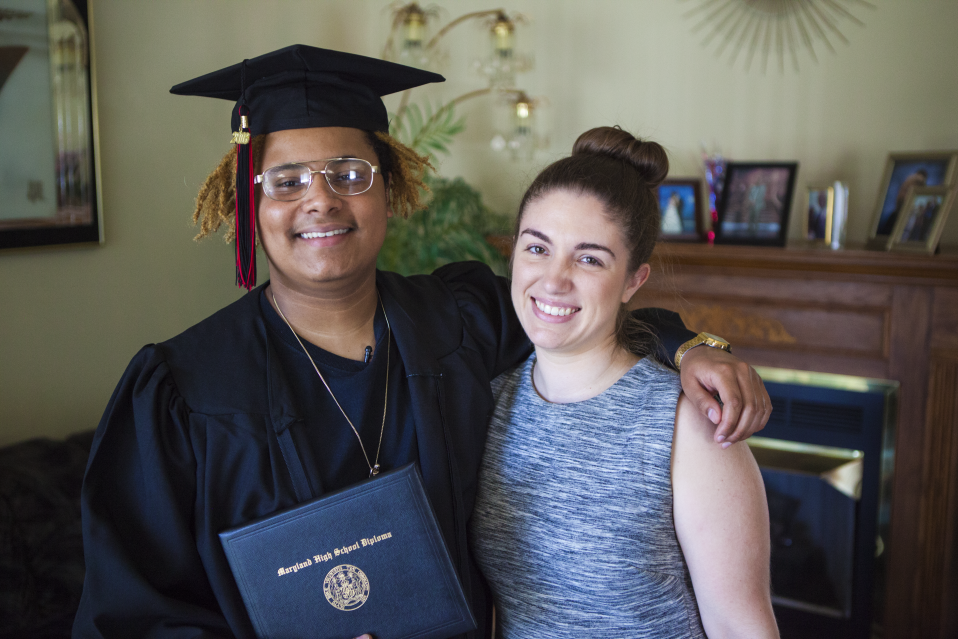
Darius was facing expulsion from his high school for a minor behavioral incident and was transferred to eLearning, where he received all of his instruction at home, in isolation, through a computer. DRM requested and represented Darius in a meeting at his school where for the first time, he was recognized as having a disability. Because of DRM’s representation, Darius was re-admitted and qualified to receive an Individualized Education Plan (IEP), which greatly improved his academic performance. Darius graduated last year and has applied to several colleges. Darius stated: “A lot of people don’t want to accept the fact that they have a disability or obstacle, but once you realize and accept that you do, you can get help and get over the obstacle.”

DRM Goes the Distance
June 12, 2018
Over 12 years ago, Disability Rights Maryland (DRM) (then known as Maryland Disability Law Center) attorneys, Lauren Young and Luciene Parsley, represented Tatyana McFadden, a sophomore in high school in Maryland. DRM’s attorneys filed a successful federal law suit that granted Tatyana’s request: to compete using her using her wheelchair, on the same track, at the same time, with the rest of her peers on her high school track team.
2 years later, in 2008, Tatyana and her family’s fight for inclusion with DRM’s expert legal assistance, and the support of many others, led to the Maryland’s passage of the Maryland Fitness and Athletics Equity for Students with Disabilities Law. Maryland was the first state in the nation to pass a law ensuring that students with disabilities (1) have an equal opportunity to participate in mainstream physical education programs; (2) receive reasonable accommodations in order to participate, to the fullest extent possible, in mainstream physical education and mainstream athletic programs; and (3) have adapted, allied, or unified physical education and athletic programs are available to them.
This spring Lauren Young was a special guest at the Unified Sports Interscholastic Track and Field Competition at Prince George’s Sports and Learning Complex to mark the 10th Anniversary of this event in Maryland. Unified Sports® teams are composed of a proportional number of students with intellectual disabilities, with other types of disabilities, and without disabilities who train and compete together on the same team. Over 3,000 students now participate in Unified Sports programs throughout Maryland public schools.
This is only one of many examples of the exceptional long term impact DRM’s legal advocacy has made over the past 40 years at for people with disabilities in Maryland. DRM is proud to share that Tatyana was recently named the world’s greatest Paralympic marathon legend, with an extensive list of honors and awards for her achievements all over the world in wheelchair racing.

Mother’s Day Message
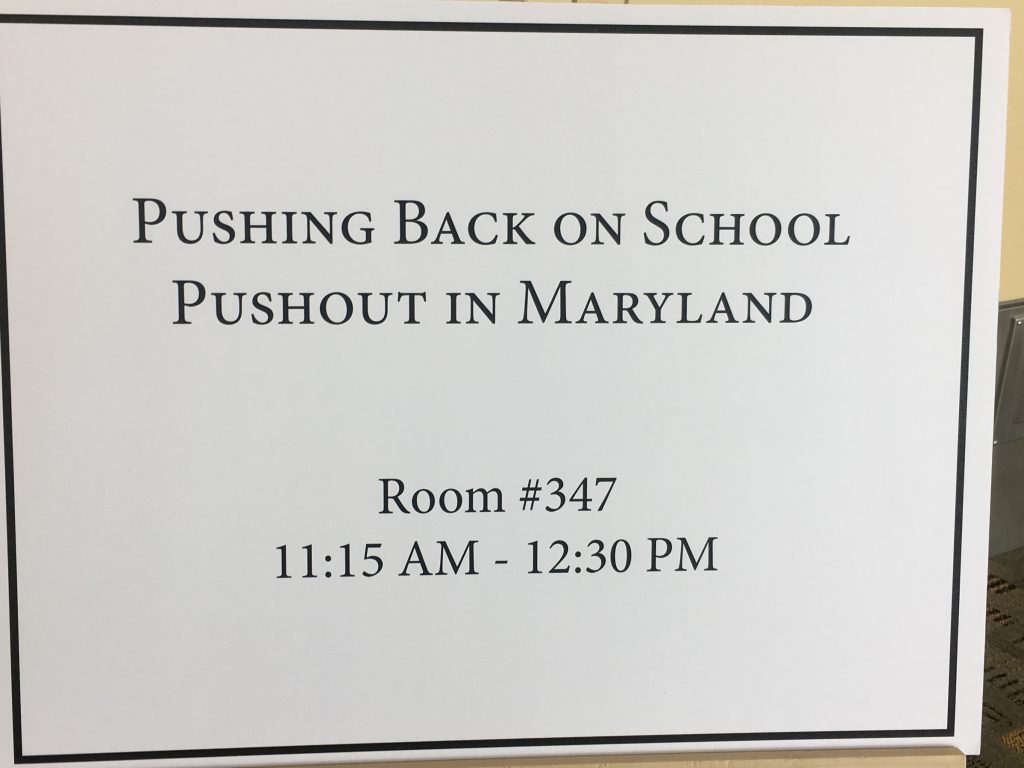
Pushing Back on School Pushout in MD
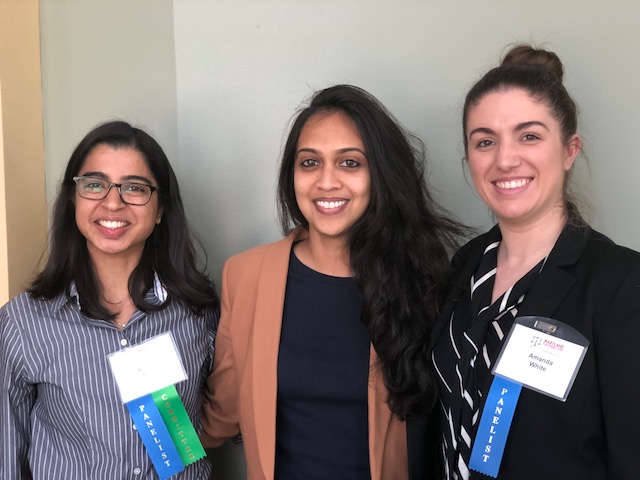
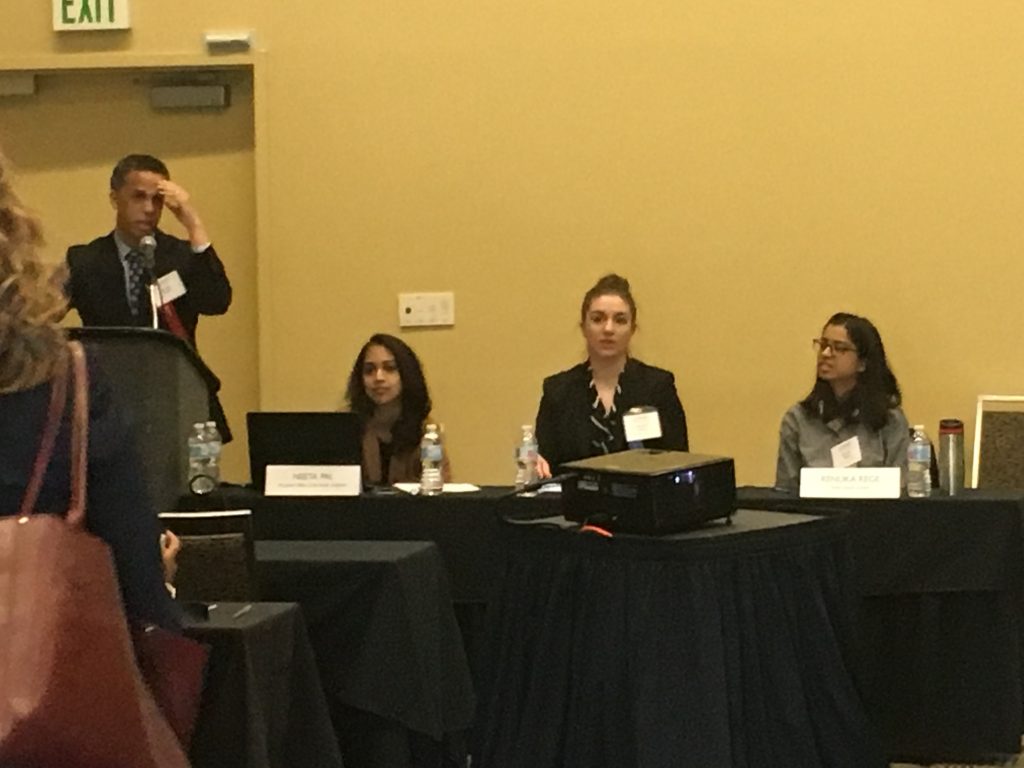
April 26th, 2018 was the Pro Bono Resource Center’s 20th Annual Maryland Partners for Justice Conference! This conference is Maryland’s only statewide legal services conference for advocates, community members, elected officials, and judges. DRM was excited to be a part of this wonderful event and staff attorney, Amanda White, presented on panel entitled “Pushing Back on School Pushout in Maryland.” This panel also featured Professor Michael Pinard (University of Maryland Francis King Carey School of Law), Renuka Rege (Public Justice Center) and Neeta Pal (Maryland Office of the Public Defender). Panelists discussed representing students in their school disciplinary hearings, with Amanda sharing her expertise in representing students with disabilities. Audience members were also introduced to the Maryland Suspension Representation Project (MSRP), which was launched recently both to expand legal representation and advocacy on behalf of children pushed out of school. DRM is proud to a be a member of MSRP, alongside the other organizations represented on the panel. If you would like more information about MSRP, please visit: www.mdsuspensionrep.org.
UPDATED: Maryland Medicaid to Cover Hearing Aids & Cochlear Implants for Adults in July
*Updated October 24, 2018:
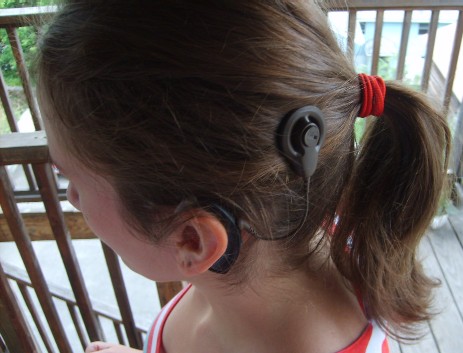
Since July 1, Maryland Medicaid now covers hearing aids and cochlear implants for adults, which were previously only provided under Medicaid to children (under 21 years old).
On October 12, Maryland finalized the regulation governing how these items will be covered (available in the Maryland Register here). In contrast to the proposed regulation, people for whom it is medically necessary may receive bilateral hearing aids, cochlear implants, and auditory osseointegrated devices (also known as bone-anchored hearing aids, or BAHAs) – one for each ear. The clinical coverage policy provides more guidance on what it means for these items to be medically necessary, but it factors in your need to use a hearing aid in school, work, or community settings. The Provider Manual will also assist medical providers and Medicaid beneficiaries in obtaining these crucial hearing devices.
Disability Rights Maryland (DRM) has been working with a team of pro bono attorneys at Sidley Austin on this issue for several years, as we believe that covering these items only for children was discriminatory.
We are hopeful that covering hearing aids and cochlear implants for adults on Medicaid will help thousands of Marylanders who desire these hearing devices in pursuing employment opportunities and engaging with their families and communities in a manner they choose.
The Governor’s Office of the Deaf and Hard of Hearing deserves appreciation for its efforts in support of this change, as do our pro bono partners at Sidley Austin. We congratulate the state in moving forward to provide these crucial opportunities for hearing services.
Original post – March 15, 2018:
DID YOU KNOW?
In Maryland, adults on Medicaid do not receive coverage for hearing aids or cochlear implants even when these devices are medically necessary for communication.
THE CHALLENGE:
Several years ago, Disability Rights Maryland (DRM) learned that Maryland Medicaid provides hearing aids and cochlear implants only to children through age 20. What happens when they grow up? And what about adults who want and need such devices for hearing loss occurring after age 21?
We learned about this issue from a new father who wanted to hear his newborn child. We learned how employment can be compromised by lack of communications. We heard from people who were frustrated at being denied a critical health care benefit.
We have been working with a team of lawyers at Sidley Austin LLP to advocate for Maryland to cover expanded hearing services for adults. Believing it legally required to cover and discriminatory to deny such services, DRM and Sidley Austin settled a case enabling an adult client to receive coverage for a cochlear implant and related services through Medicaid. We continued to advocate for others.
THE NEWS:
The Maryland Department of Health (MDH) has announced that starting in July 2018, Medicaid will cover medically necessary cochlear implants and hearing aids for adults. The Department has stated that it is working on regulations to implement these changes. The Governor’s Office of the Deaf and Hard of Hearing deserves appreciation for its efforts in support of this change, as do our pro bono partners at Sidley Austin.
NEXT STEPS:
MDH will issue proposed regulations – with a 30-day public comment period – that will determine how these devices are covered and how people may obtain them. Watch this page or review the Maryland Register to see when proposed regulations are issued. Your voice can matter on how Maryland covers these essential services.
We are hopeful that covering hearing aids and cochlear implants for adults on Medicaid will help thousands of Marylanders in pursuing employment opportunities and engaging with their families and communities in a manner they choose.