Blog

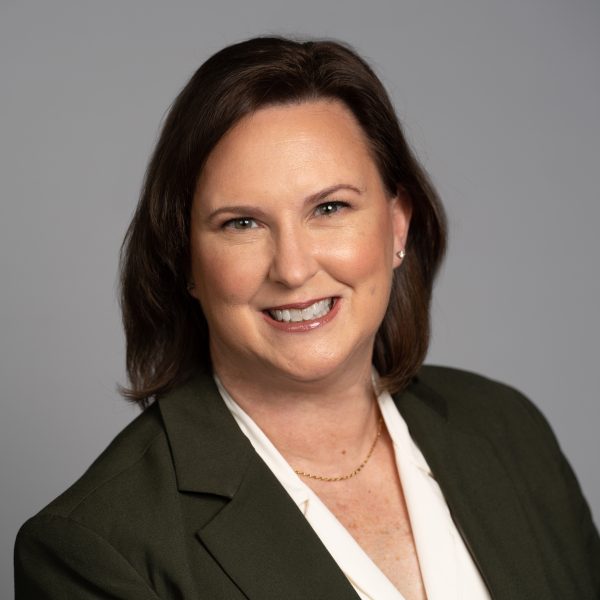
Meghan Marsh Takes Helm as DRM’s New Executive Director

Meghan Marsh, DRMs New Executive Director

A MESSAGE FROM THE BOARD OF DIRECTORS:

It is with great excitement that we announce the appointment of Meghan Marsh, a 30-year veteran of the organization and dedicated disability rights advocate, as Disability Rights Maryland’s (DRM) next executive director. Meghan was selected after a national search performed by DRM’s Board of Directors.

“Meghan has been at the heart of DRM’s mission for 30 years and her dedication, passion and unwavering commitment have been the driving force behind so many of DRM’s achievements. We could not be more thrilled to have her as DRM’s new executive director, leading us through this next exciting chapter in the fight for disability rights and justice,” said Ryan S. Perlin, president of the DRM Board of Directors.

Meghan will be a familiar face to many as she has served DRM in several roles since joining in 1993. Most recently, she served as interim executive director since May. Her previous roles include intake specialist, staff attorney, communications manager, and deputy director. In the latter role, she led grant reporting and quality assurance. She also supervised DRM’s intake team and projects aimed at protecting the rights of Social Security beneficiaries with disabilities.

“For three decades, DRM has been my second home, and the fight for disability rights, my life’s work,” expressed Meghan Marsh, DRM’s executive director. “I have tremendous respect and admiration for the entire team at DRM. With kindness, courage, and persistence we can forge a future where every individual thrives, and so it is with great excitement and gratitude that I step into the role of executive director.”

Meghan holds a bachelor’s degree from Penn State University in social work and earned her law degree from the University of Maryland Francis King Carey School of Law. In 2020, she was awarded the Benjamin L. Cardin Public Service Award by the Maryland Carey Law Alumni Board for her significant contributions to furthering the ideals of public service in the law. Meghan is also a certified mediator and a 2014 National Disability Rights Network leadership fellow. She served as an adjunct professor for seven years at the University of Maryland University College Graduate School of Business and Management teaching writing, statistics, and management classes to MBA candidates. 

Meghan will succeed DRM’s most recent executive director, Robin Murphy, who served the organization for the past six years successfully leading DRM through years of financial growth and unprecedented demand for services. Her tenure included guiding the organization through the COVID pandemic, navigating multiple challenges while ensuring the non-discriminatory provision of critically needed services for Marylanders with disabilities. Robin leaves DRM in a strong position as a robust statewide disability rights advocacy organization.

“Robin’s legacy with DRM will be as someone whose vision for the organization never wavered, and whose decisions were guided by one principled question: is this in the best interest of Maryland’s disability communities? The Board of Directors is grateful to Robin for her strong guiding principles and leadership as a steward of DRM’s mission,” added Perlin.

“Meghan knows DRM’s work inside and out and there is nobody more suited for this next chapter,” said Robin Murphy, DRM’s former executive director. “She’s intimately aware of the challenges facing Marylanders living with disabilities today and will bring her innovation and tenacity to addressing those challenges head-on.”  

We are so pleased to have Meghan leading the organization into this next chapter. She is committed to growing the organization’s strengths of advocacy, outreach and individual representation while expanding DRM’s commitment to building an intersectional approach to disability justice.

Read more

Focus Group Participants Needed

photo of people in group. Young Black woman talking

The Schaefer Center at the University of Baltimore is conducting focus groups of Maryland renters who were represented by an attorney in an eviction case. The focus groups are a part of an evaluation of the Access to Counsel in Evictions program administered by the Maryland Legal Services Cooperation (MLSC).

Focus groups will be held around the state of Maryland. If you are interested in participating, please click the link below to see if you qualify. You can also call 866-986-7649 to speak with someone about the focus groups. Space is limited.

During the survey, we will determine eligibility and provide more information on date and time of the focus group. Qualified participants will receive a $75 gift card upon completion of the focus group. 

 Click Here for Eligibility Survey

For more information, please call the Schaefer Center at 866-986-7649. The phone lines will be open Monday- Friday from 10am- 8pm. 

Read more

Celebrating 30 Years of PAIR Programming

4 older adults outside smiling (one in a wheelchair, one with a walker, and two with canes) and a worker

We are excited to celebrate the anniversary of the Protection and Advocacy for Individual Rights (PAIR) Program.

What is the PAIR Program?

Congress established the PAIR Program in 1993 under an amendment to the Rehabilitation Act. With PAIR Program funding, DRM protects and advances the legal and human rights of people with physical, hearing or vision disabilities.

What type of advocacy does the PAIR Program fund?

DRM used PAIR Program funding to help Baltimoreans who are d/Deaf and hard-of-hearing engage in local politics.

In 2021, DRM began working with a resident of Baltimore who is hard-of-hearing and has a keen interest in politics at all levels. Our client was extremely frustrated because virtual meetings hosted by Baltimore City were not accessible for them. These meetings were broadcast live on a platform called CharmTV.

DRM took action! We wrote a letter to the mayor highlighting our concerns about how d/Deaf and hard-of-hearing citizens were being denied meaningful participation in the City’s programs, and stressing the City’s obligation to make all programs and services accessible. After several meetings involving DRM, our client, the City officials, and with the support of the Maryland Governor’s Office of the Deaf and Hard of Hearing, we achieved some positive outcomes.

The City agreed to incorporate American Sign Language (ASL) interpreters for public addresses and introduced Communication Access Realtime Translation (CART) captioning. CART captioning uses a special kind of keyboard to provide accurate translations that appear on screens, laptops, and devices. Further, the mayor’s office created a Frequently Asked Questions document and internal resource guide to make sure meetings are accessible to everyone.

DRM’s advocacy, funded by the PAIR Program, has the potential to impact the population of over 117,100 individuals who are hard of hearing or deaf in at least one ear in Baltimore City.

We are happy to be able to serve more people, creating a more integrated and just society, thanks to funding from PAIR program.

Read more

Take Survey to Determine Our 2024 Priorities

Man and woman with child who is in a wheelchair

Every year we ask the community which disability-related legal issues need to be addressed. The survey results guide the focus of DRM’s work over the next year. We especially want to hear from people with disabilities, Black, Indigenous and people of color (BIPOC), and others affected by intersectional discrimination and oppression.


There are so many issues we would like to tackle, but our resources are limited. We need to focus on the most important needs in our communities to make the greatest impact.


Here are 4 ways to take the survey by September 7th:

1.  Click here to submit online.

2.  Print a survey using link below and mail to Disability Rights Maryland 1500 Union Ave # 2000, Baltimore, MD 21211

3.  Email a completed survey to Feedback@DisabilityRightsMD.org 

4.  Call 410-727-6352 ext. 0 to complete over the phone or request to complete in-person


Online Survey: https://www.surveymonkey.com/r/3TPV8MC 

Printable survey: https://disabilityrightsmd.org/wp-content/uploads/ASP-Survey.FY2024.pdf 

Encuesta en Español: https://disabilityrightsmd.org/wp-content/uploads/ASP-Survey.FY20241-Espanol.docx

Read more

Honoring Judith Heumann’s Legacy on the Anniversary of the ADA

In July, we celebrate Disability Pride Month to commemorate the passing of the landmark Americans with Disabilities Act (ADA) in July 1990. It is a time to acknowledge the history, accomplishments, experiences and challenges of disability communities. This is the first year we celebrate without Judith Heumann, “the mother” of the disability rights movement, who played an important role in advocating for passage of the ADA.

In the 1970s and 1980s, Judith’s courageous efforts and advocacy during public protests, including the famous 504 Sit-in, focused attention on the rights and needs of people with disabilities. Her work and that of other disability rights activists contributed to the momentum behind the push for comprehensive civil rights legislation for people with disabilities, leading to the eventual passage of the Americans with Disabilities Act in 1990.

The ADA is a comprehensive civil rights law enacted to prohibit discrimination against individuals with disabilities and to ensure that they have equitable access and opportunities.

The ADA prohibits disability discrimination in many areas:

  • Employment: Employers cannot discriminate against qualified individuals with disabilities. They must provide reasonable accommodations to help employees perform their jobs.
  • State and Local Government Services: Government programs and services, including public education, health care and voting, must be accessible to individuals with disabilities.
  • Transportation: Public transportation services must provide people with disabilities an equal opportunity to benefit from their services.
  • Public Places: Business that are open to the public like restaurants, stores, and entertainment venues must be accessible to people with disabilities. Physical barriers should be removed or reduced.
  • Telecommunications: Phone companies must provide relay services for people with hearing or speech impairments.

The ADA has significantly improved the lives of millions of Americans with disabilities and fostered a more inclusive society in our nation. Judith Heumann’s leadership stood out in the crusade and victory for inclusion, as well as respect and acceptance of people with disabilities. Her voice defined what justice is and what justice means for people with disabilities.

DRM will continue to proudly celebrate Judith’s legacy and those that continue her work by presenting the Judith Heumann Champion of Justice Award to individuals who embody the values, accomplishments, and spirit that she infused into the disability rights revolution.


Learn more about Judith Heumann and the Disability Rights Movement.

Learn more about why and how to celebrate Disability Pride Month 2023.


Read more