Blog

Voting Events: Your Guide to Staying Informed and Engaged

With the election just around the corner, it’s essential to stay updated on key voting dates, registration deadlines, and local events. Whether you’re a first-time voter or a seasoned participant in the democratic process, our goal is to keep you informed and engaged.


UPCOMING EVENTS:

PG County Workforce Fair (in person)

Thursday
October 17, 2024
10:30-1pm

New Carrollton Branch Library
7414 Riverdale Rd
New Carrollton, MD

The Maryland Senate Candidate Forum (Virtual)

Tuesday
October 22, 2024
12:00 PM – 1:15 PM. 

Registration is required to receive an event link. https://zfrmz.com/KElYVOpakXTC9u7hXnad

Importance of Voting/Brief KYR Panel Discussion with Maryland Department of Disability (Virtual)

Thursday
October 24, 2024
4pm-5pm

Request a link from Yesheva Kelly via email (yesheva.kelly@maryland.gov) or phone at 410-767-3659

Check back here and on our Instagram and Facebook pages for additional events and information on voting.


Read more

Pro Bono Honor Roll

Pro Bono Honor Roll Page Banner. it says Oct 2022-Dec 2023 Pro Bono Honor Roll Proudly Presented by DRM

Through DRM’s Pro Bono Program, volunteer attorneys protect the rights of people with disabilities, help them access crucial services, and ensure equal treatment under the law.

Our Pro Bono Honor Roll recognizes law firms and attorneys who provided a substantial number of pro bono service hours during the period of October 1, 2022 – December 31, 2023. Their expertise, dedication, and generosity positively impact the lives of people with disabilities and make Maryland a better place for all.

Law Firms Honorees

  • Gordon Feinblatt LLC
  • Jenner & Block
  • Mayer Brown LLP
  • O’Melveny & Myers LLP
  • Sidley Austin LLP
  • Steptoe LLP
  • Venable LLP
  • Whiteford Taylor & Preston
  • Wiley Rein LLP

Individual Honorees

  • Alexandria K. Montanio, Gordon Feinblatt LLC
  • Allison Boyle, U.S. Merit Systems Protection Board
  • Andrea LeWinter, Law Offices of Nicole Joseph
  • Ashley Van Cleef, Law for Parents
  • Ayn Ducao
  • Benjamin Bradford, Jenner & Block
  • Beryl Gardner, U.S. Patent and Trademark Office
  • Cayla Calderwood, Sidley Austin LLP
  • Chelsea Beaupre
  • Christian Hatten, Jenner & Block
  • Daniel Orrock, Schneider Electric
  • Danielle Siegel, O’Melveny
  • Eliel Flores, Mayer Brown LLP
  • Emiliano Aguirre
  • Emily Caputo
  • Emily Tifft, Steptoe LLP
  • Jaime Seaton, BGS Law
  • Jim Rocap, Steptoe LLP
  • Marilyn Park
  • Matthew Emmick, Office of the Public Defender
  • Matthew Haws, Jenner & Block
  • Olivia Miller
  • Paul Madden, Whiteford Taylor & Preston
  • Pete Rosenbaum, Jenner & Block
  • Sarah Lang, Schneider Electric
  • Tara More, Mayer Brown LLP
  • Timothy Scott, Wilson Elser

Become a Pro Bono Attorney

If you are interested in a meaningful pro bono experience, visit our Pro Bono Opportunities page or contact our Pro Bono Coordinator.

Photo of Jim Rocap, a White man with short grey hair wearing a white collared shirt, grey suit and red striped tie.

Jim Rocap

“Assisting our pro bono clients to stand strong, push back against injustice, and insist on their rights is immensely important, not only to the clients, but to our system of justice and the rule of law.”

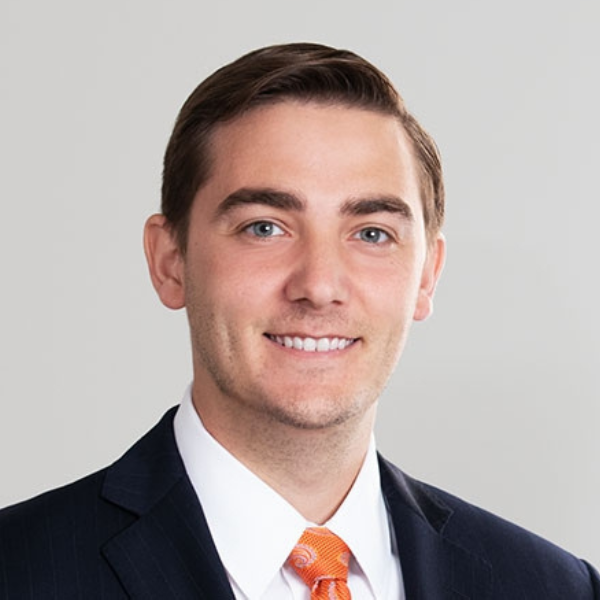
Photo of Tim Scott a young White man with short dark hair wearing a black suit, white collared shirt and orange tie.

Tim Scott

“When a lawyer steps in, the school systems that might otherwise ignore these families start to take them seriously. My client’s mom and counselor are already great advocates, but having a lawyer there ensures they are taken seriously.”

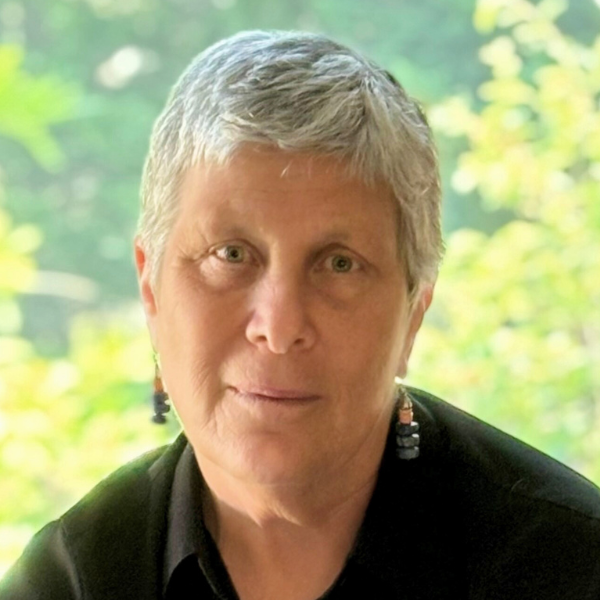
Photo of Marilyn Park and older white woman with short white hair wearing dangling earrings and a black blouse

Marilyn Park

It was a reminder that when people believe in you; it’s powerful. The conversation should always start with “you’re a great person, tell me about yourself” not “tell me about your challenges and failures.””

Read more

2024 Legislative Session Highlights

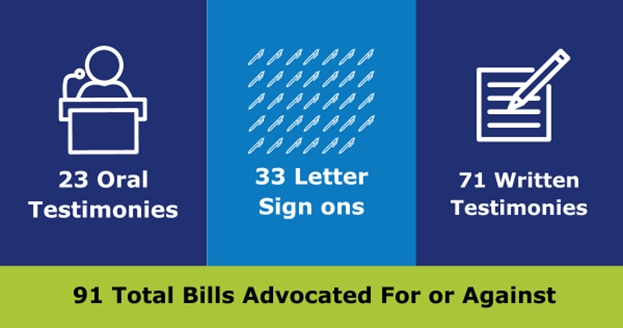
Graphic says 23 oral testimonies, 33 letter sign ons, 71 written testimonies, 91 total bills advocated for or against

The legislative session was full of successes and challenges. DRM worked with partner organizations, individual allies and legislators to advocate for bills that advance disability rights and against bills that exclude people with disabilities in Maryland. This year, DRM took a position on a total of 91 bills. We submitted 71 written testimonies, orally testified on the impact of 23 bills and joined other organizations in signing 33 letters of support or opposition. Below are the highlights from this year’s session.  

MOBILITYLINK PARATRANSIT SERVICE IMPROVEMENTS STUDY (SB0891/HB1199)

This study establishes an objective review of the Maryland Transportation Administration’s MobilityLink. The Maryland Transportation Institute (MTI), an independent third party, will conduct the study to determine the best methods to deliver MobilityLink service.  MTI will look holistically at MobilityLink—including its service delivery model, customer service, reliability, performance, and workforce—and compare it with other paratransit providers nationwide. MTI will provide policymakers with concrete recommendations to improve service for Marylanders with disabilities. “MobilityLink riders rely on the service to access their community and unfortunately often experience poor service – like late pick-ups and drop-offs, long trips, and lengthy hold times for customer service calls. DRM is hopeful that MTI’s tangible recommendations will propel Maryland to enact sweeping paratransit reform to give Marylanders with disabilities the safe and reliable public transportation they deserve.” says DRM attorney, Daria Pugh.

NEW UNIT TO PROTECT PEOPLE IN STATE CORRECTIONAL FACILITIES (SB0134/HB0297)

“DRM’s investigations and monitoring of Maryland prisons over a number of years has demonstrated that people with disabilities are often subject to dangerous, violent, and unhealthy conditions.  The General Assembly’s creation of an independent, impartial correctional ombudsman for Maryland is a hopeful step forward .” says DRM’s Litigation Counsel, Luciene Parsley.  After 2 years of advocacy, Maryland will establish the Correctional Ombudsman Unit to investigate complaints and issue findings and recommendations. Increased oversight, transparency and accountability is important to address systemic issues and rights violations in Maryland’s correctional facilities. Additionally, the new unit provides a way to address rights violations that fall within the gaps of current complaint issue areas, like complaints against contractors who provide medical and mental health services for the Department of Public Safety and Correctional Services (DPSCS). The unit will report annually to the General Assembly, including information about systemic issues, rights violations and how DPSCS responds to the Ombudsman’s recommendations.

FUND FOR FAMILIES TO ACCESS SPECIAL EDUCATION ATTORNEYS, ADVOCATES AND CONSULTANTS (SB0797/HB0903)

This bill establishes a program to help families with limited financial resources access lawyers, advocates and education consultants for a variety of special education matters. Currently, DRM maintains a pro bono referral program for families with very limited means, but this will enable a broader range of families to access attorneys and, for the first time, to obtain services from advocates or consultants at no cost to them. The attorneys, advocates and consultants will be paid through the program, which will be administered by the Maryland Volunteer Lawyers Service (MVLS). DRM attorney Leslie Seid Margolis and the Education Advocacy Coalition crafted the bill that will soon help thousands of Maryland students. “I look at all the education intakes that come in and it’s hard to put into words what it feels like to turn families away, knowing how limited their options have been; this program will be so helpful in expanding the resources available to families.” This is important because families who have advocacy assistance are better equipped to secure appropriate services for their children and resolve education issues. The passing of this legislation brings us closer to ensuring all students have what they need to be successful in school.

Last year, Maryland passed a law that lets families get money back for expert costs in addition to attorneys’ fees if they win a case against a school system. This new program is different because it enables families to access legal support at all stages of the special education process, not just when they are facing a due process hearing; the program emphasizes assistance for families for Individualized Education Program (IEP) meetings and informal dispute resolution.

SELF-DIRECTED MENTAL HEALTH SERVICES PILOT PROGRAM (SB0988)

DRM introduced a bill that would create a self-directed mental health care pilot program for people with disabilities. Bills such as this one often take several years to pass, and DRM will continue to advocate for this program next year. Studies show that when people can manage their own care, they do better in their communities and are less likely to live in institutions. Most importantly, many people with disabilities prefer this kind of care. Right now, some people with serious needs must settle for inadequate help, join programs that might not fit them well, or go without help entirely. This new program would allow people to make a plan that fits their needs instead of making their needs fit into the current service system. Self-directed mental health care is already working in 6 states and is a good step toward fair treatment for mental health issues.

ASSISTED OUTPATIENT TREATMENT (SB0453/HB0576)

DRM opposed the expansion of involuntary civil commitment laws, including the creation of an Involuntary Outpatient Civil Commitment program, termed “Assisted Outpatient Treatment” (AOT). AOT had strong support from the current administration and passed in both the House and Senate. Testimony in favor of AOT revealed many fears and stereotypes about people with mental health disabilities’ capacity to make decisions about their minds and bodies. DRM believes people with mental health disabilities should be provided with any accommodations and supports necessary to make and communicate health care decisions, and that individuals have the right to receive care in the most integrated setting available. AOT meets none of these criteria. DRM is concerned that AOT risks jeopardizing efforts to create an innovative, behavioral health system in Maryland – one that is truly focused on supporting the voices and choices of people with mental health disabilities to receive the support they need to be included in our communities.


Thank you!

DRM would like to thank our donors whose support enabled us to advocate for people with disabilities throughout the 2024 legislative session.

If you are passionate about creating a more equitable Maryland and able to give, please consider making a generous contribution to support our work. We rely exclusively on gifts from individuals and general operating grants to support this work.

SUPPORT DRM TODAY!

Read more

Celebrating PADD Programming

Four girls posing after doing yoga

We are excited to celebrate the anniversary of the Protection and Advocacy for Individuals with Developmental Disabilities (PADD) Program. 

What is the PADD Program? 

Congress established the PADD program in 1975 as the first Protection and Advocacy (P&A) program to protect the human and civil rights of people with developmental disabilities. The PADD program was a part of Developmental Disabilities Assistance and Bill of Rights Act of 1975 in response to the horrific conditions that were exposed at Willowbrook State School. An investigation of Willowbrook, a New York state institution for people with intellectual disabilities, revealed widespread abuse and neglect and sparked a national movement to protect the rights of people with disabilities. 

How does PADD Impact the Community? 

The PADD program is designed to provide a safety net for people with developmental disabilities and to ensure they have access to the services and supports they need. This includes investigating allegations of abuse and neglect, advocating for the rights of people with developmental disabilities in legal and administrative proceedings, providing information and referral services, and educating the public about the rights of people with developmental disabilities. 

For example, DRM’s PADD program has helped draft and advocate for the End the Wait Act, which passed in 2022. Several of Maryland Medicaid’s home and community-based services programs have extensive waitlists, with some applicants waiting up to 10 years to access services. In 2021 there were 3,694 people on the waiting list for Developmental Disabilities Administration (DDA) services, 6,221 children with autism on the Autism Waiver Registry, and over 20,000 people on the Home and Community-Based Options Waiver waitlist (despite there being approximately 1,100 unused slots). The End the Wait Act requires the state to develop a plan to cut the Medicaid waitlists in half by fiscal year 2024. 

Additionally, DRM has assisted people with developmental disabilities by helping to shut down an unsafe public residential institution, abolishing the payment of subminimum wage to individuals with disabilities working in the state of Maryland, ensuring that people with intellectual and developmental disabilities have access to vaccines, and spearheading the passage of a Supported-Decision Making bill. 

Together with our partners – the Maryland Developmental Disabilities Council and the Maryland Center for Developmental Disabilities – DRM continues to work every day to create a more independent, inclusive and just society for people with developmental disabilities. 

Read more

Meghan Marsh Takes Helm as DRM’s New Executive Director

Meghan Marsh, DRMs New Executive Director

A MESSAGE FROM THE BOARD OF DIRECTORS:

It is with great excitement that we announce the appointment of Meghan Marsh, a 30-year veteran of the organization and dedicated disability rights advocate, as Disability Rights Maryland’s (DRM) next executive director. Meghan was selected after a national search performed by DRM’s Board of Directors.

“Meghan has been at the heart of DRM’s mission for 30 years and her dedication, passion and unwavering commitment have been the driving force behind so many of DRM’s achievements. We could not be more thrilled to have her as DRM’s new executive director, leading us through this next exciting chapter in the fight for disability rights and justice,” said Ryan S. Perlin, president of the DRM Board of Directors.

Meghan will be a familiar face to many as she has served DRM in several roles since joining in 1993. Most recently, she served as interim executive director since May. Her previous roles include intake specialist, staff attorney, communications manager, and deputy director. In the latter role, she led grant reporting and quality assurance. She also supervised DRM’s intake team and projects aimed at protecting the rights of Social Security beneficiaries with disabilities.

“For three decades, DRM has been my second home, and the fight for disability rights, my life’s work,” expressed Meghan Marsh, DRM’s executive director. “I have tremendous respect and admiration for the entire team at DRM. With kindness, courage, and persistence we can forge a future where every individual thrives, and so it is with great excitement and gratitude that I step into the role of executive director.”

Meghan holds a bachelor’s degree from Penn State University in social work and earned her law degree from the University of Maryland Francis King Carey School of Law. In 2020, she was awarded the Benjamin L. Cardin Public Service Award by the Maryland Carey Law Alumni Board for her significant contributions to furthering the ideals of public service in the law. Meghan is also a certified mediator and a 2014 National Disability Rights Network leadership fellow. She served as an adjunct professor for seven years at the University of Maryland University College Graduate School of Business and Management teaching writing, statistics, and management classes to MBA candidates. 

Meghan will succeed DRM’s most recent executive director, Robin Murphy, who served the organization for the past six years successfully leading DRM through years of financial growth and unprecedented demand for services. Her tenure included guiding the organization through the COVID pandemic, navigating multiple challenges while ensuring the non-discriminatory provision of critically needed services for Marylanders with disabilities. Robin leaves DRM in a strong position as a robust statewide disability rights advocacy organization.

“Robin’s legacy with DRM will be as someone whose vision for the organization never wavered, and whose decisions were guided by one principled question: is this in the best interest of Maryland’s disability communities? The Board of Directors is grateful to Robin for her strong guiding principles and leadership as a steward of DRM’s mission,” added Perlin.

“Meghan knows DRM’s work inside and out and there is nobody more suited for this next chapter,” said Robin Murphy, DRM’s former executive director. “She’s intimately aware of the challenges facing Marylanders living with disabilities today and will bring her innovation and tenacity to addressing those challenges head-on.”  

We are so pleased to have Meghan leading the organization into this next chapter. She is committed to growing the organization’s strengths of advocacy, outreach and individual representation while expanding DRM’s commitment to building an intersectional approach to disability justice.

Read more