Blog

Honoring Judith Heumann’s Legacy on the Anniversary of the ADA

In July, we celebrate Disability Pride Month to commemorate the passing of the landmark Americans with Disabilities Act (ADA) in July 1990. It is a time to acknowledge the history, accomplishments, experiences and challenges of disability communities. This is the first year we celebrate without Judith Heumann, “the mother” of the disability rights movement, who played an important role in advocating for passage of the ADA.

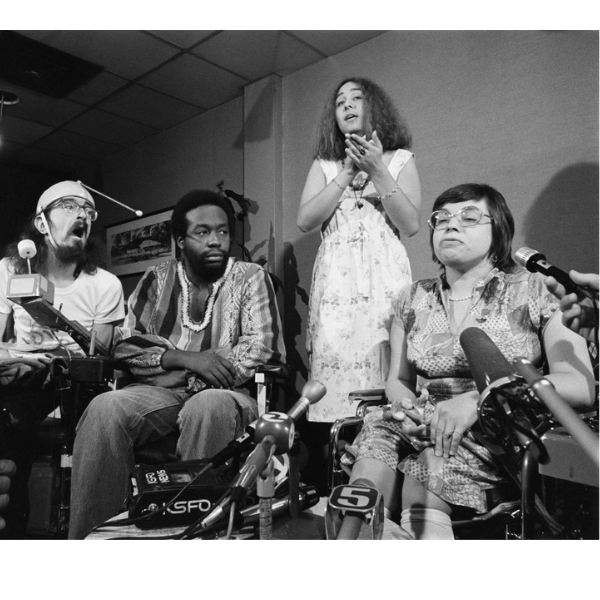
In the 1970s and 1980s, Judith’s courageous efforts and advocacy during public protests, including the famous 504 Sit-in, focused attention on the rights and needs of people with disabilities. Her work and that of other disability rights activists contributed to the momentum behind the push for comprehensive civil rights legislation for people with disabilities, leading to the eventual passage of the Americans with Disabilities Act in 1990.

The ADA is a comprehensive civil rights law enacted to prohibit discrimination against individuals with disabilities and to ensure that they have equitable access and opportunities.

The ADA prohibits disability discrimination in many areas:

  • Employment: Employers cannot discriminate against qualified individuals with disabilities. They must provide reasonable accommodations to help employees perform their jobs.
  • State and Local Government Services: Government programs and services, including public education, health care and voting, must be accessible to individuals with disabilities.
  • Transportation: Public transportation services must provide people with disabilities an equal opportunity to benefit from their services.
  • Public Places: Business that are open to the public like restaurants, stores, and entertainment venues must be accessible to people with disabilities. Physical barriers should be removed or reduced.
  • Telecommunications: Phone companies must provide relay services for people with hearing or speech impairments.

The ADA has significantly improved the lives of millions of Americans with disabilities and fostered a more inclusive society in our nation. Judith Heumann’s leadership stood out in the crusade and victory for inclusion, as well as respect and acceptance of people with disabilities. Her voice defined what justice is and what justice means for people with disabilities.

DRM will continue to proudly celebrate Judith’s legacy and those that continue her work by presenting the Judith Heumann Champion of Justice Award to individuals who embody the values, accomplishments, and spirit that she infused into the disability rights revolution.


Learn more about Judith Heumann and the Disability Rights Movement.

Learn more about why and how to celebrate Disability Pride Month 2023.


Read more

Expanded Services for Adults with Brain Injury

The Maryland Department of Health (MDH) has temporarily expanded the technical eligibility for the Home and Community-Based Services Waiver for Adults with Brain Injury (Brain Injury Waiver), which provides residential, day, supported-employment, and individual-support services to adults with neurobehavioral, cognitive, and physical deficits resulting from a brain injury. The Brain Injury Waiver typically only allows transition from just a handful of nursing facilities, but applicants may now transition from all private nursing facilities. The MDH is currently evaluating the sustainability of this expansion, which will remain in effect until November 2023.


Under the temporary expansion, Marylanders residing in Maryland nursing facilities, chronic hospitals, or state owned and operated facilities may be eligible for this program if:

  • They are between the ages of 22-64;
  • They have sustained an acquired brain injury that occurred after the age of 17;
  • The brain injury resulted in a cognitive, physical, behavioral, or emotional disability;
  • The individual’s income does not exceed $2,742 per month nor has assets that exceed $2,000 in value;
  • Their needs meet a nursing facility or chronic hospital level of care; and
  • Their medical issues are chronic, predictable, stable, and routine.


If you or someone you know is in a private nursing facility, is interested in living in the community with services via the Brain Injury Waiver and meets the above criteria, complete this interest form as soon as possible before the temporary expansion period ends in November 2023.  The form will connect you with staff from the Brain Injury Association of Maryland, who can assist with determining Waiver eligibility and the application process. The process can take a while, so the sooner you complete the interest form, the better.


More information is available at https://www.biamd.org/brain-injury-wavier-program.html

Read more

DRM Mourns the Loss of Judith Heumann

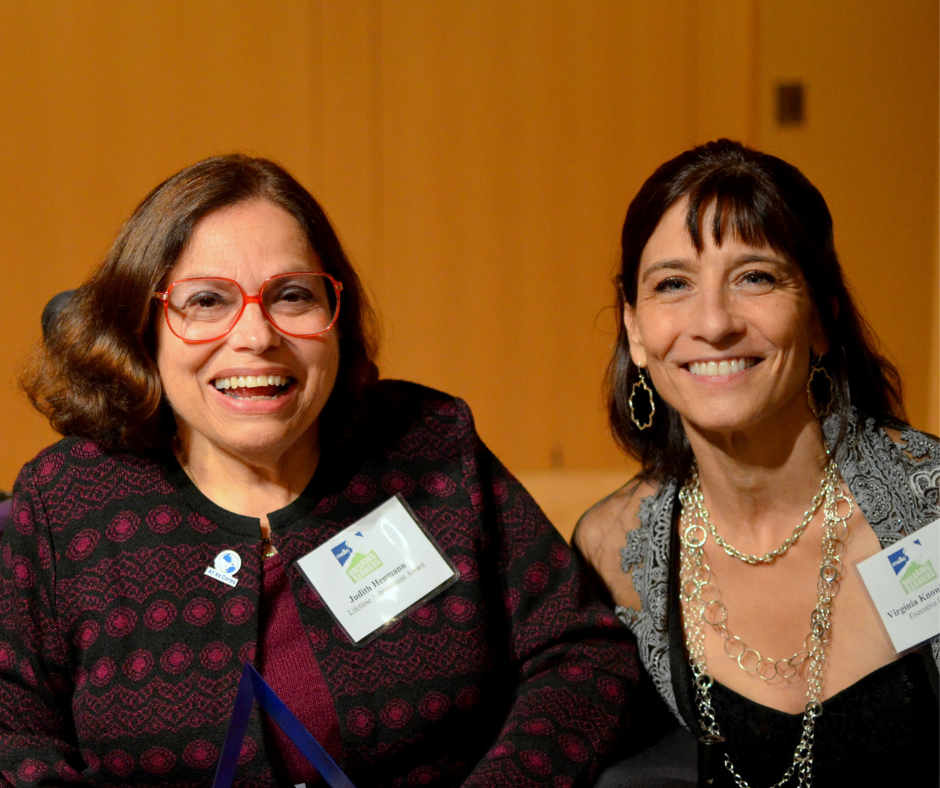
Photo: Judith Heumann at DRM’s 2015 Breaking Barriers Gala with former Executive Director Virginia Knowlton Marcus.


Disability Rights Maryland (DRM) mourns the passing of Judith Heumann, a hero in the disability rights movement, on March 4th at the age of 75. As we grieve the loss of Judith, often regarded as “the mother” of the disability rights movement, we remember her five decades of tenacious advocacy for people with disabilities.

In 2015, at our annual Breaking Barriers Award Gala, DRM presented Judith with the Lorraine Sheehan Lifetime Achievement Award for her heroic leadership and defining voice in the disability rights movement. Her leadership stood out in the crusade and victory for inclusion, as well as respect and acceptance of people with disabilities. Her voice defined what justice is and what justice means for people with disabilities.

In 2020, DRM established the Judith Heumann Champion of Justice Award to honor in perpetuity her legacy as one of the world’s most influential disability rights activists. This prestigious award recognizes one outstanding honoree for a lifetime of advocacy for the disability rights movement and all the civil rights movements with which it intersects.

Judith personally presented the award at DRM’s virtual Breaking Barriers Gala in 2020 to Wade Henderson, whose leadership and advocacy helped secure vital legislation for people with disabilities. She returned in 2021 to present the award to Representative Jamie Raskin for his lifelong commitment to the advancement and legal protection of rights for people with disabilities.

DRM will continue to proudly celebrate Judith’s legacy by presenting the Judith Heumann Champion of Justice Award to individuals who embody the values, accomplishments, and spirit that she infused into the disability rights revolution.

Judith was truly the agent and ethos that led to transformative changes in misperceptions about people with disabilities.

For more details on Judith’s life and memorial service, visit: judithheumann.com

Read more

ARE YOU READY TO LEAD? Disability Rights Maryland Seeks an Executive Director

Disability Rights Maryland (DRM) is seeking an experienced disability rights leader and advocate to lead this private, nonprofit, 501(c)(3) law firm and advocacy organization as it creates an integrated and just society by advancing the legal rights of people with disabilities throughout Maryland. DRM is Maryland’s designated Protection & Advocacy (P&A) agency and a member of the National Disability Rights Network. We work with people with disabilities to pursue opportunities to champion their rights to self-determination, dignity, equality, opportunity, and freedom from discrimination and harm. We provide free legal services to persons with disabilities in Maryland and engage in systemic litigation and public policy advocacy to positively impact people’s lives.  DRM’s work spans a spectrum of issues including criminal justice and prison reform, education, monitoring facilities to investigate abuse, neglect and rights violations, voting, housing, transportation, assistive technology, health care, and the right to self-determination and appropriate services, among others, on behalf of Marylanders with all types of disabilities.  DRM envisions a world where people with disabilities are fully included in all aspects of community life.

The new Executive Director will have the opportunity to lead DRM’s experienced and talented team with a positive, results-oriented style that inspires all staff and broadens the circles of support for DRM’s work. The successful candidate will manage DRM in a manner consistent with this core mission and can relay commitment to the mission both inside and outside the organization while demonstrating the highest ethical standards and operating with integrity and transparency in conducting the business of the organization.


HIGH PRIORITY ROLES AND RESPONSIBILITIES:

  • To serve as the primary public face of DRM with the disability community, the media, public officials, other nonprofits, and the community at large and to represent the organization in its various local, state, and federal networks;
  • To lead, encourage, and inspire a staff that is collaborative, talented, collegial and committed to the well-being of the communities we serve and one another;
  • To articulate and nurture a vision for DRM’s future;
  • To lead DRM’s community advocacy efforts including disseminating important information, making referrals, providing technical assistance, and training, as well as individual representation and systemic advocacy to promote legal rights for people with disabilities;
  • To lead DRM in setting priorities and in planning and pursuing creative strategies for addressing future challenges to the disability community and to the organization;
  • Develop and guide fundraising strategies which include cultivating and soliciting major gifts, and working alongside the board and staff to develop actionable fundraising plans;
  • To effectively and ethically oversee DRM’s finances in compliance with applicable law and DRM’s mission;
  • To grow and diversify resources to support DRM’s work;
  • To support an engaged Board of Directors in carrying out its responsibilities to the


QUALIFICATIONS:

  • Possession of a Juris Doctor degree and membership in good standing with the Maryland Bar, or ability to obtain membership upon employment;
  • A passion for the mission of DRM and its multi-faceted advocacy approach;
  • A demonstrated commitment to, and experience with, advancing the rights of persons with disabilities in ways that express the values of inclusion, autonomy, equal access and full participation in community life;
  • Experience working with persons with disabilities, including from diverse communities;
  • An understanding of the difference between disability rights and disability justice;
  • Successful leadership of lawyers and others in a justice-oriented organization;
  • Experience managing a similar organization, including staff supervision, budget development, financial oversight, grant and contract compliance, strategic and priority planning, and managing change;
  • Experience successfully raising funds from private sources, including foundations and individual donors, and from federal, state and local governments;
  • Experience working effectively with multiple organizations and individuals with diverse perspectives, the public, elected and appointed officials, and consumers of services;
  • Demonstrated understanding of legislative and executive-level public policy issues and processes, in Baltimore and Maryland a plus;
  • Experience working productively with or on an engaged board of directors;
  • Interpersonal skills that demonstrate integrity, respect, compassion, collegiality, inclusivity, flexibility, capacity to motivate and thoughtfulness;
  • Outstanding communication skills, including written language, with a range of audiences and
  • Preference for an individual with lived experience as a person with a disabiiity.


SALARY AND BENEFITS:        

The salary range is $130,000 to $160,000 depending on experience and special skills. DRM also offers a very generous benefits package which includes excellent medical insurance, employer-paid dental, prescription, vision, life, and disability insurance, as well as pre-tax savings plans, and a retirement savings opportunity with generous employer contributions. DRM offers eligible employees reimbursement for the cost of spouse or partner-paid health insurance premiums up to an established maximum amount. DRM also offers generous paid time off package, including vacation, holidays, sick time, and more. DRM is headquartered in Baltimore and a hybrid work schedule is available upon approval by the Board.


HOW TO APPLY:

Applications will be accepted until the position is filled and will be reviewed as they are received. Serious candidates should submit applications as soon as possible, but no later than June 30, 2023. Applications should contain a current resume and a thoughtful cover letter outlining how your skills and experience meet the qualifications of the position.

Applications should be submitted by email to Christine Griffin (cgriffin@benderconsult.com) and should include “DRM Executive Director Search” in the subject line. Please include in your message how you heard about the search. Only a select number of highly qualified individuals will be invited to participate in the formal interview process. This is a confidential process and will be handled accordingly throughout all phases of the recruitment and selection process.

Materials should be submitted electronically in Microsoft Word or PDF format.

DRM has retained the executive search firm and certified disability-owned business enterprise, Bender Consulting Services, Inc. to conduct this search, www.benderconsult.com.

DRM is an equal opportunity employer. Qualified individuals with disabilities including those who are also people of color, LGBTQIA+ individuals and others who contribute to staff diversity are encouraged to apply.   DRM provides reasonable accommodations to enable individuals with disabilities to perform the essential functions of the position. Please notify us if you need a reasonable accommodation for any part of the application and/or hiring process.


ABOUT DISABILITY RIGHTS MARYLAND:

DRM’s advocacy improves the lives of people with disabilities and creates a more inclusive and just society for all, by advancing human rights. We help people with disabilities pursue opportunities to participate fully in all aspects of community life, and champion their rights to self-determination, dignity, equality, opportunity, and freedom from discrimination and harm.

DRM provides free legal services to Marylanders with disabilities on matters that are related to their disabilities and fall within our advocacy service areas. DRM’s advocacy services are developed in close collaboration with the community of people we serve, and in compliance with our funding sources.

DRM is Maryland’s designated Protection & Advocacy (P&A) agency and a member of the National Disability Rights Network. As such, DRM is part of a nationwide network of organizations working to advance the rights of people with disabilities. Congress established the P&A System in 1975 in response to squalid conditions in institutional facilities for people with disabilities. In creating and funding the P&As, Congress granted us unique statutory authority to conduct investigations of suspected abuse and neglect of individuals with disabilities in facilities.

DRM currently has a budget of approximately $5 million, and a staff of 45, including 19 attorneys, 3 intake specialists, 14 advocates, and 9 administrative support staff. Among the leadership team members are the Director of Litigation, the Director of Finance, the Deputy Director, and the Executive Director.

DRM receives federal funding from several agencies under the following grants:

  • Protection & Advocacy for Developmental Disabilities (PADD), U.S. Department of Health and Human Services
  • Protection & Advocacy for Individuals with Mental Illness (PAIMI), U.S. Department of Health and Human Services
  • Protection & Advocacy for Individual Rights (PAIR), U.S. Department of Education
  • Protection & Advocacy for Assistive Technology (PAAT), U.S. Department of Education
  • Protection & Advocacy for Traumatic Brain Injury (PATBI), U.S. Department of Health and Human Services
  • Protection & Advocacy for Voting Access (PAVA), U.S. Department of Health and Human Services
  • Protection & Advocacy for Beneficiaries of Social Security (PABSS), Social Security Administration

In addition, DRM is a grantee of the Maryland Legal Services Corporation. In 2016, DRM was awarded a Victims of Crime Act (VOCA) grant from the Governor’s Office of Crime Control & Prevention. DRM has received support from private foundations including the Harry & Jeanette Weinberg Foundation, Morton K. and Jane Blaustein Foundation, Open Society Institute, Hoffberger Foundation, Zanvyl and Isabelle Krieger Fund, Fund for Change, Steptoe Foundation, Venable Foundation and the Baltimore Bar Foundation. DRM’s governing Board of Directors financially supports the organization with 100% participation. DRM also relies on charitable contributions from individual donors.
Read more

PRESS RELEASE: Guardians Sue Maryland Seeking Limits on and Oversight of the Use of Powerful Psychotropic Medications for Children in Foster Care

January 17, 2023

MEDIA CONTACT

Megan Berger, Disability Rights Maryland, megan.berger@disabilityrightsmd.org
Meredith Curtis Goode, ACLU of Maryland, curtis@aclu-md.org
Camilla Jenkins, Children’s Rights, cjenkins@childrensrights.org


BALTIMORE, MD – Today, Disability Rights Maryland, the ACLU of Maryland, Children’s Rights, and Morgan, Lewis & Bockius LLP filed a lawsuit against the Maryland Department of Human Services (DHS) and Social Services Administration (SSA) on behalf of minor children in the State’s foster care system who are given one or more psychotropic medications. The lawsuit covers all jurisdictions except Baltimore City, which is covered through separate ongoing litigation involving children in foster care.

The lawsuit claims that for over a decade Maryland’s DHS and SSA have failed to exercise adequate oversight of children in foster care who are given potentially dangerous psychotropic drugs.

As many as 34% of children in Maryland’s foster care system are given psychotropic drugs, and more than half of those children are prescribed multiple drugs at the same time. Nearly 75% of these children who are taking psychotropic drugs do not have a psychiatric diagnosis. Black children, disproportionately represented in Maryland’s foster care system, are at greater risk of being subjected to dangerous prescribing practices in many counties.

The complaint outlines dangerous failures on the part of SSA and DHS to serve as effective custodians for the children in their care, including failing to compile and maintain adequate medical and mental health records, failing to implement an adequate informed consent process, and failing to operate an adequate secondary review system to conduct second opinion evaluations when necessary.

Up to 80% of U.S. children who enter state foster care systems have significant mental health needs, including the effects of trauma caused by having been taken from their families and loved ones. The uncertainties and instabilities associated with life in foster care often add to that trauma, leading children to display complex behaviors that require the attention of mental health professionals. Frequently psychotropic medications are administered, which can be of help to children, but only when sufficient oversight mechanisms are in place.

Psychotropic medications are powerful drugs that directly affect the chemicals in the brain that help to regulate emotions and behavior. Children face a great risk of harmful side effects including seizures, suicidal thinking and behavior, weight gain, excessive fatigue and chronic diseases such as diabetes. The likelihood of adverse effects of medication increases with the number of medications, and these side effects can be lifelong, continuing even after the medication is stopped.

The risks of harm from psychotropic medications are increased for children in government systems because they do not have a consistent interested party to coordinate their treatment. The fact that multiple people are involved in their care can result in poor recordkeeping and miscommunication leading to children being prescribed too many drugs, at too high a dosage, at too young an age. Children pay the price, which is unacceptable.

Y.A., a sixteen-year-old Black child who has been in the custody of Maryland’s DHS for over two years, is one of the named plaintiffs in the case. He has repeatedly cycled between hospitalizations and temporary motel stays, and today remains separated from his mother and confined to a residential treatment facility. Y.A. overdosed twice on his medications while living in the motel. He has suffered severe side-effects, including extreme weight gain, difficulty controlling his hands and arms, difficulty walking, dizziness, fatigue, stomach aches, and head-aches, all of which are known symptoms of one or more of the multiple psychotropic medications he is taking. Neither Y.A. nor his mother has been given adequate information about his medications, and no adult with authority to consent to his medications regularly attends Y.A.’s psychiatric appointments with him. He believes that DHS “doesn’t pay attention” to him.

“Now is the time for our state to address these systemic deficiencies and provide proper care for the children they promised to protect. With a new administration in Annapolis, a critical window has opened for Maryland to address past failures and meet its responsibility to support children in state custody. The children of Maryland deserve nothing less,” said Megan Berger, assistant managing attorney at Disability Rights Maryland.

“The lack of comprehensive recordkeeping for all children is exacerbated by the state’s failure to enforce a clear and unambiguous informed consent policy. Medications are approved without benefit of a child’s health history, leading to potentially life-threatening complications,” said Samantha Bartosz, deputy director of litigation at Children’s Rights. “Biological parents are often not engaged, and may not even be aware that their child is taking psychotropic drugs. Youth, too, have no voice in consequential health decisions impacting them. Instead they are forced to take medications against their will.”

###

About Disability Rights Maryland

Disability Rights Maryland, Inc. (DRM), a non-profit organization, is Maryland’s designated Protection & Advocacy Agency federally authorized to advance and protect the civil rights of individuals with disabilities, including children and youth with mental health, developmental, and other disabilities. DRM works with people with disabilities to achieve full participation in community life, self-determination, equality, freedom from abuse and neglect, and access to civil rights. For more information, please visit www.disabilityrightsmd.org.

About the ACLU of Maryland

Founded in 1931, the ACLU of Maryland exists to empower Marylanders to exercise their rights so that the law values and uplifts their humanity. Our vision is for Maryland’s people to be united in affirming and exercising their rights in order to address inequities and fulfill the country’s unrealized promise of justice and freedom for all. www.aclu-md.org

About Children’s Rights

Every day, children are harmed in America’s child welfare, juvenile justice, education, and healthcare systems. Through relentless strategic advocacy and legal action, we hold governments accountable for keeping kids safe and healthy. Children’s Rights, a national non-profit organization, has made a lasting impact for hundreds of thousands of vulnerable children. For more information, please visit www.childrensrights.org.

Read more